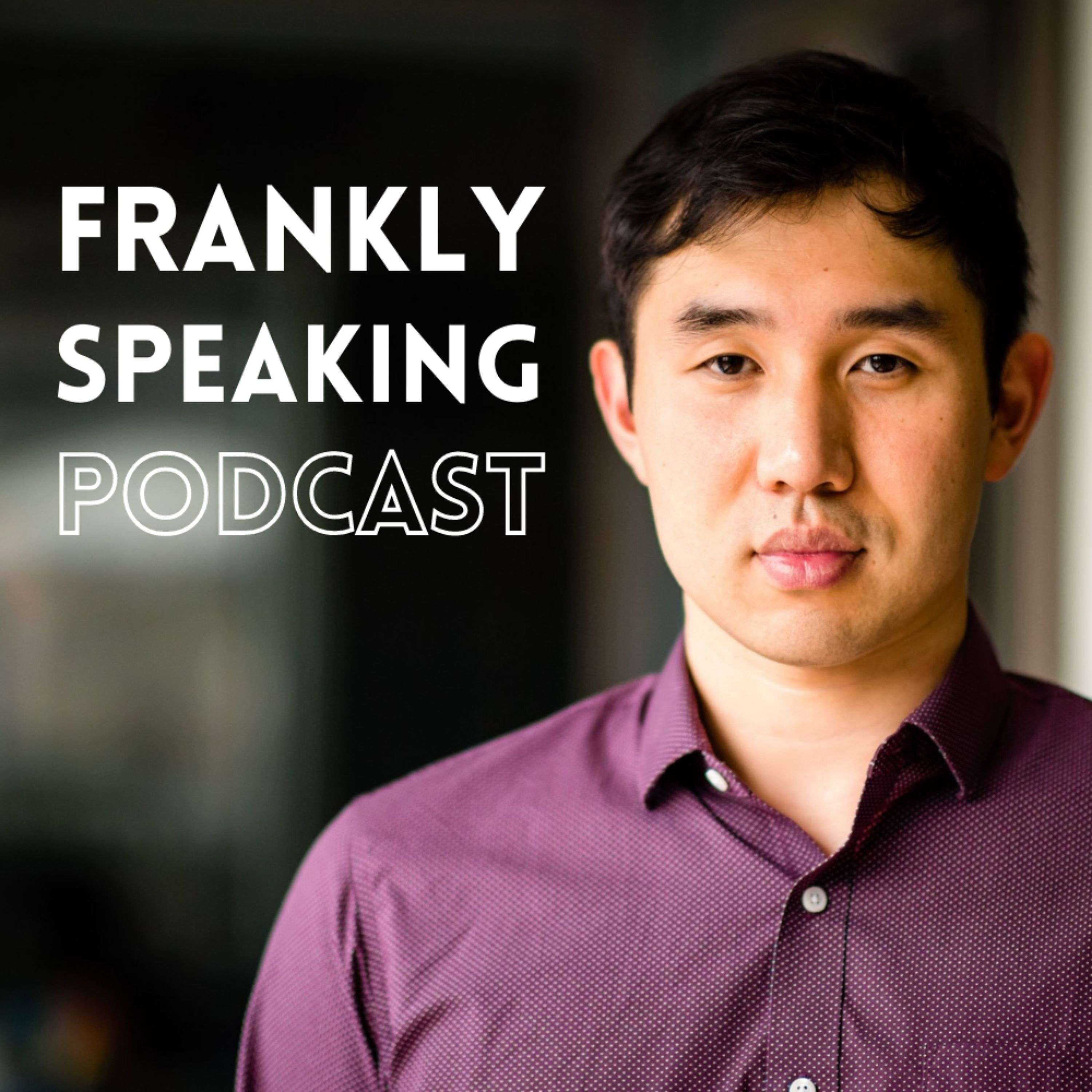
E13: Dr. Karan Rangarajan
Welcome to another episode of the Frankly Speaking podcast. Frank Niu is joined by Dr. Karan Rangarajan.
Chapters
- 0:00 From the OSCE station to weird medical facts
- 3:51 TikTok becomes an educational platform
- 7:13 AI in medicine and its ethical limits
- 13:46 Gut instinct and why AI won't replace surgeons
- 18:45 Dog walks, reading books and making apple cider
- 23:09 Becoming a doctor and gender bias in surgery
- 30:59 Dyslexia, accommodation and alternative career paths
- 35:18 Online hate and turning comments into content
- 39:43 Kids online, ID verification and moderation
- 48:30 Critical thinking, media bias and paid influencers
- 54:02 Chasing follower numbers versus enjoying the journey
- 56:54 Sponsored ads and doctors promoting supplements
- 1:02:28 Cancel culture, controversy and online anger
- 1:18:59 TikTok's business features and creator monetization
- 1:27:13 Audiences on Instagram, YouTube Shorts and YouTube
- 1:36:15 The next platform: AR and VR
- 1:38:58 Future plans: podcast, YouTube and a book
Mirror automatically copies the trades of top investors, politicians, and creators directly in your brokerage account. Check out choosemirror.com.
Reach out to Frank at frankjniu@gmail.com
► Follow Me On Tiktok: https://www.tiktok.com/@frankniu
► Follow Me On Twitter: https://x.com/niu_xiaofei
► Follow Me On Instagram: https://www.instagram.com/niu_xiaofei/
► Follow Me On Linkedin: https://www.linkedin.com/in/frankniu/
Transcript
0:00 So today, I am joined by Dr. Karan. He is a world famous doctor, has millions of followers on social media. Thank you for taking the time to join me on Frankly Speaking today. Yeah, thanks for having me. I'm excited to be here and have a chat with you, man. Yeah, so I'm curious, like, what made you start creating content on TikTok? Like, I see quite a few medical professionals on there. And just wondering, like, what your personal story was there? Yeah, I mean, a lot of people associate kind of my social media origins with just being on TikTok. But actually, back in 2012, I had a YouTube channel, I still have a YouTube channel, it's the same one, but it had a different name back then, it was called the OSCE station. And it was a from my time in medical school where I made videos more directed towards healthcare professionals and students to teach them how to do, you know, medical examinations,
0:56 and you know, how to use certain things and how to take blood and all that kind of stuff. So it's very geared towards medicine, not for like the every person, viewer. And it got a bit of a cult following had like 30,000 followers, which I thought was quite big for back then in 2012. And I wish I kind of continued that because in 2012, YouTube was a completely different world, social media was a different world back then. But you know, medical school finals got in the way and then being a doctor and all that kind of stuff. And I just put that to the side. And then in 2018, I kind of, I always liked medical history.
1:30 So many interesting stories from there, you know, just millions of amazing stories. And I started posting some medical history posts on Instagram. And then on 2020, kind of tick tock came along, and I was a casual consumer of content for a long time. And then actually, I was on call one day with one of my juniors. And he said, you know, tell me some interesting facts. And I said, okay, did you know that there are more bacterial and microbial cells in the human body than human cells? And he's like, okay, I don't believe you. And I said, you know, the stomach acid can dissolve razor blades. It's that powerful. And he was like, Oh, don't believe that either. And he made me do these facts on a video. And I posted it on TikTok. I was in my scrubs and my surgical hat. And I just captioned it weird medical facts part one.
2:20 And we scrubbed in for surgery, we finished the surgery. And he said, check your phone. And I checked my phone on TikTok. And there were loads of messages and comments and likes and shares. At that time, I had like maybe a couple of hundred followers. And that video hit like 100,000 views. And I was like, wow, that's incredible. 100,000 people watch this. And I realized people wanted those weird medical facts. There was a niche and appetite for medical knowledge. And that was my longest ever running series.
2:49 And I made one to 99 parts of weird medical facts. And obviously, over time, I evolved and talked about COVID misinformation, the pandemic, other health stuff, how to sleep better, gut health, all these sort of things. And I branched out to various things. But yeah, that was my origin. And I'm glad I stuck to it. That's amazing. That's amazing. Yeah. Hearing that you create content all the way back in like 2012. Like back then, creating content on social media was kind of seen as like this almost weird thing. Because back then, people were like, hey, don't share your information online. Like, and people who wanted to be like influencer wasn't really a word back then. Back then, it was like people who genuinely wanted to create content just because they thought it was fun or interesting in some way.
3:35 And then hearing about how like TikTok blew up that video, I think it's a very common story, especially around that time, where like a lot of content creators started getting a lot of traction, because there's also so many more people consuming that content. Yeah, I mean, I think at the very first time when, to answer that second question, to go on to that point, in 2020, I think that was when, obviously, the pandemic was just becoming more of a global phenomenon. And people weren't just like, okay, it isn't just this one country that's affected, my country now being affected. So a lot of people became more kind of hyper aware of their own health, hygiene, and things like that.
4:20 So for doctors, certainly that saw a boom in the rise of these kind of doctor fluences, medical influences. And obviously, my kind of time, you know, was associated with that as well. But I think also, there was a change in the actual TikTok app itself. It was shedding off its emblem of being this musically dancing, singing, lip syncing app. And actually, it became more of an educational app. And actually, I remember around May of 2020, 2020, someone from TikTok reached out to me and said, Hey, you're making all this amazing educational content, we're launching this hashtag called hashtag learn on TikTok. And I think around April, May 2020 was the first time they were releasing this hashtag. And they said, we want you to post, you know, as many videos as you can with learn on TikTok.
5:11 And I was already doing educational videos, I thought, okay, cool. If it maybe helps my videos in any way, I put hashtag learn on TikTok with all my videos. And, you know, you look at that hashtag now, it has like, dozens of billions of views, which just shows you like, you know, how TikTok has become an educational app as well. And, you know, to that, to that end, it's, you know, you see all these people commenting how the first time they'll look something up will be on TikTok, it's become like a Google rival, for like SEO and, you know, searching functions. But yeah, even back then, social media, YouTube was like the Google version of what TikTok is now in terms of you could look stuff up, how to, you know, put up a, you know, shelf or how to fix your car. And that was YouTube back then. But TikTok is becoming that. And yeah, the social media landscape back then was so different. And like you said, I made content just because I liked shooting videos. I was like, always into drama. I liked being on camera. I liked educating. So, you know, it wasn't intended as yeah, I want to go viral with this. I don't even think that was a word back then in the sense that we know it, you know, that was purely a medical word. But yeah, I just thought, yeah, let me just put these videos out. But now it's like, it's a career for people, you know, it wasn't really back then, but it is now.
6:31 Yeah, it's pretty crazy to see like, so many young people, basically, every Gen Z, I know, has some sort of social media presence, whether that's like on TikTok, or YouTube, or something else. And a lot of people are seriously considering it as a career, which, I don't know how I feel about that, just because I feel like most of them will be disappointed. And it's interesting that you mentioned the SEO portion, because I read some study or some stat that over like 40% to like close to half of Gen Z, TikTok is actually their main search engine of choice over Google, which is insane to me, right? Like, not just for like, but I think it might have been specific to like the food and entertainment category.
7:13 So not like a blanket everything, but Google definitely seems to be on a downtrend. And especially I don't know if you looked into chat GPT, it's like this new AI, natural language processing thing that's that might give Google some problem in the future, where it's like Google search results, you have like crawlers that crawl websites, and they try to give you through their algorithm, like something that they think might make sense. But then chat GPT can ask it a question. So it'd be like, I don't know, how do I put on my shelf, and it'll give you actual human readable language back, like, oh, here's how you do it. Here's XYZ steps. So like, clearly, one is much more human readable, you don't actually have to go look for the information just presents you the information.
8:00 But I was also wondering, like, what were your thoughts on a lot of these AI, like helpers, like I was even working on some of this tech, but all the way back in like, I don't know, 2012 or 2013, when they're like, hey, Watson's gonna help doctors and help nurses or whatever, that never really materialized, as far as I know. But kind of wondering about the future implications of kind of a lot of these like AI helpers for the medical field. Yeah, I think, I mean, the AI that kind of people think of movies and stuff, I guess, you know, we're not even scratching the surface of getting to that kind of level of sentience at all. But I mean, the kind of AI we have now is still mind blowing to see what it can do, just even from like, you know, generating amazing novel images and kind of deep fakes of people that just look like people that there aren't. And I think specifically in the medical field.
8:56 There was an interesting study that I came across a few months back. And it was basically that these researchers used AI to detect the racial ethnicity of people just based on x rays. Yeah, and I was astounded because like they calibrated the x ray so that they removed any, you know, clues that might signal bone density, because we know some racial groups might have disparities and differences in bone density, which might be a clue. They removed that they removed any demographic identifying features.
9:32 So it was just almost the pixels. And AI was still able to detect whether someone was Hispanic or, you know, black African or white Caucasian or, you know, Indian Asian. And I thought, wow, and even get the percentages and the breakdown. And obviously, that's amazing, because how can it do that when even a human radiologist or a human doctor can't do that? And then you think of the ethical conundrums like, OK, if AI is used for medical treatment algorithms, maybe AI is used to sort out organ transplant waiting lists.
10:09 Who gets the transplant first based on AI? Can AI that's maybe biased by human biases and racial biases then affect who gets a transplant? So you think of all these things and obviously, you know, saying AI is biased or AI is racist is not fair on AI because it's built on data sets that we give it, which are naturally biased because we're biased. But it's just an interesting thing to think about how AI can be used for good and for bad. Like, you know, those Microsoft, I think it was Tabot that came out many years ago and it was meant to be this like kind of emo punk girl that people could chat to on Twitter and, you know, ended up saying like loads of, you know, fascist comments and it like supported Hitler.
10:57 And basically the public twisted this table who was meant to be like this kind of really cheerful thing into something quite twisted. And, you know, besides all that, I think AI has a future in medicine, a huge future in just taking the burden off healthcare professionals, but also, you know, AI is capable of making kind of complex calculations far beyond the human brain. Like, you know, it's already beaten us in chess and all sorts of other games and daily things. So it only makes sense. It will be better at picking up and reading maybe CT scans, MRI scans, and picking up tiny cancers that we could never pick up, picking up which is the best treatment or chemotherapy for that patient based on their genetic makeup.
11:44 So I think, yeah, it's incredible and it will change the face of medicine. There's loads of ethical considerations we need to take into account. Yeah, and like you said, right now, it's still really far away from any sort of like sentience or like the media portrayal of AI. But it sounds like there's already real world applications that can help support medical professionals. So you mentioned it can identify like racial characteristics potentially. I've also seen that it's done really well in more of like the analysis, whether it's like a static picture, it will be able to tell or diagnose with pretty high accuracy.
12:20 Like, oh, does this person have melanoma or some other sort of disease? And then, like you said, then in the future, potentially, it can also start to recommend cures. And it's really interesting that you mentioned the ethical portion of it, because I think a lot of technologists are also thinking about that portion, because like as AI goes into more and more things like robots, specifically like military grade robots or drones. Right now, I think most of those are still like man controlled. So there's an operator behind the drone, especially with the war in Ukraine.
12:54 But in the future, it's like, OK, we'll just deploy these autonomous drones. And like software has a bunch of issues. You can't really trust it that much. And in SF, they actually just authorized the release of robots with like deadly weapons. Yeah, I read that. Yeah, that's insane. That's like so dystopian. It's like Black Mirror type stuff. I know, I think that right now the implication is still like there's a human operator behind it. But then there's the whole like cognitive dissonance type thing. Like if you're playing a video game and you shoot someone compared to like holding a weapon in real life, I think there's a very, very clear difference in terms of like your emotions and what you're feeling.
13:33 So I think it's, yeah, I don't know. It sounds like a very scary headline. I feel like there's more nuance to it that I probably don't know about. But like the headline, like killer robots being deployed. It's like, whoa, what's going on there? Yeah, I mean, that's the thing. I feel that when it comes to robots and AI, we're still at that stage where like, you know, can AI replace human instincts? Like, you know, that's the one reason why I'm not scared that as a surgeon, AI is going to replace me anytime soon.
14:03 Because there's something about like a surgeon's gut instinct or a doctor's gut instinct that you cannot replace. It's like, you know, I'll come across occasionally a patient who has normal blood tests, normal CT scan, normal everything. But just my gut tells me that something's wrong. And we might just proceed with like a diagnostic surgery and we find something. You know, it doesn't happen very often, but it does happen. It's happened maybe three or four times in my career, but it's that gut instinct that leads to that diagnosis.
14:33 And similarly, like, you know, say, you know, they've got police, autonomous AI, you know, kind of robot police. Maybe they just see things in black and white and they miss the nuance. So that's the kind of worry with things like AI for me. Yeah, and then the part that you mentioned, like that gut feeling, that specialty, I think a lot of people, until you're really knowledgeable in an area and have that experience, you can't really understand. It's like humans, naturally, we have like a gut instinct.
15:03 You can kind of tell if someone is sketchy sometimes. Like, you can't quite put your finger on it, but you're like, this dude's giving it off with like a red flag. But then you can apply that same instinct. So obviously, Dr. Karan, who's very experienced in the medical field, has now developed that instinct for a lot of his diagnosis. But the same thing can be said for something, whether that's like business or investing or trading or something. Some people just, through years of experience, they can kind of tell.
15:29 And you're not always able to explain it explicitly because it requires all this base knowledge and experience that you've had throughout your life. And without the same knowledge or experience, it's hard to convey exactly that to another person because they just, there's so much to build on that they don't have. But I think like a lot of the professional world actually runs on that. So it's instead of systems being built to work perfectly, it's actually a bunch of humans or individuals who are making it work smoothly by using a lot of these exceptions.
16:03 Yeah, I always wondered, you know, what was the magic? What's the science in gut instinct? And actually, you know, a couple of years ago, I just kind of delved and went in a bit of a rabbit hole into this subject. And it's pretty interesting because, you know, it turns out that we probably use, you know, actually 90, 95% of our brain function is all kind of subconscious, you know, beyond the realms of our cognition. And all of the senses, the sensory stimuli that we hear, that we see, that we can smell, that we can feel and taste, you know, our brain filters out most of that stuff.
16:41 And only gives us like the kind of distilled amount that we need to survive. Like, you know, you're crossing the road, it tells you whether the car is coming or not, and how firm the road is, like, whatever you need to survive. But there's other things like, hey, there's a kite in the background, there's a kid screaming somewhere, all that is drowned out, because it's not crucial to our survival. But it's that all just goes into like, the brain's memory banks. And it's there somewhere. And it's like, you know, firefighters can tell when the roof's about to collapse, it's a gut instinct, because they know from several years of those subconscious experiences, which are stored in their kind of libraries.
17:16 And the brain uses that to calculate and extrapolate future of, you know, calculations, okay, this is going to happen, because previously that happened when this happened, it's all these micro calculations. And it's, you know, just crazy, how that all works. And we think gut instinct is just this kind of like a stroke of luck, or like, it's a guesswork. But actually, it's complex, unfathomable calculations that our brain just does that we can't, you know, specifically say, Oh, it's this. And, you know, we, if we don't understand how that gut instinct works, and how our brain works, how can we make an AI that is kind of sentient, because we don't really know how we work, you know, so I think the kind of for me, when people ask me, what's like, when are we going to get to that point, you know, that kind of point where AI overtakes humans, I don't know, I don't think it will happen anytime soon.
18:13 And if it does, it will be because humans are enhancing themselves with kind of mechanical parts, you know, like the neural link type thing. Yeah, it's a common question I get as well as like, hey, you know, when our programmer is going to be out of a job, or like when our ex profession going to be out of a job, and people don't realize that it's like, we're very far away from that point. And it's more like AI can do really well within the constraints of like a game, because there's only a certain set of parameters or experiences or learnings or rules.
18:45 But real life, there's an exponential amount of variables and data to consume. And we're just nowhere near that point right now.
18:55 And I guess on shifting the topic a little bit, what do you enjoy doing in your free time? Not that you might have much of it, but like, we've talked a little bit about games. I'm just curious, like, what do you like to do for fun? Yeah, no, you're right. I mean, I would say, pre-pandemic, you know, kind of, I enjoyed, you know, going out a lot. But I would say that since 2020, I've been such like an introvert outside of social media, and I just kind of stayed at home. I literally, any free time I get, I try to get a workout when I can.
19:34 And I just love going out with my dog. Like, I'm fortunate in that I live kind of in the countryside in the UK. I moved out of London years ago. And I don't miss London at all. So I live in the countryside and loads of forests near me. I just go for walks, like, long-ass walks with my dog, where I literally just contemplate things. You can probably hear my dog in the background when I was here. My ears are burning. But, yeah, I just like kind of being by myself. It sounds a bit kind of, you know, aloof and elusive.
20:10 But, yeah, I like being by myself, just contemplating stuff. And more recently, I kind of set myself a challenge where I try to read as many books as I can in a year. I used to read a lot when I was younger. I kind of, the most, mainly the books I was reading over the last few years, like medical textbooks and research papers and things like that. But I kind of just wanted to read books again. So I've been kind of, you know, going back on that trend of just kind of reading books. And that's what I enjoy mainly, like really boring stuff.
20:44 I mean, I don't think it's boring. I think the way society frames it, like they frame a lot of introverted hobbies as, like, boring. But I think that's really unfair because, like, reading a book is a really interesting activity. Like, you can experience other lifetimes or things that can never happen in real life. There are stories in books, and people love stories. And I think the whole, like, being by yourself thing, I can really relate. Like, I've always enjoyed being by myself. Like, I also enjoy hanging out with other people.
21:14 But I think it's, like, a description I've heard that I somewhat agree with. It's, like, extroverts, when they hang out with other people, it's, like, they get recharged. Their energy levels go up. And then introverts, their energy levels go down. And mine definitely go down. So it's, like, I can hang out with other people to a certain extent before I'm, like, okay, let me just be by myself for a bit. Like, read a book or play a game or something. I mean, one of the things, I'm exactly like that. And also, another one thing I should mention is that, kind of, in the last three years, I've enjoyed, kind of, growing stuff and making stuff.
21:47 In the sense of, I like to use my skills, skills that I don't have to develop them and make them better. Like, two things specifically I've done. Like, I don't really drink alcohol much. And, in fact, I've not had a drink for, like, three years. But, in my garden, I have a couple of apple trees. And they produce loads of apples. So I learned how to make apple cider. And that was something I've been doing for the last couple of years. Like, figuring out all the different equipment to buy. Or, like, the siphoning tube.
22:15 The yeast. Watch concentration this. Brewer's yeast. This and that. And I made some pretty awesome cider. And I bottled them. And I've got, like, 50, 100 bottles of cider in my garage. And another thing is just, like, growing vegetables, aubergines, eggplant for people in America. You know, carrots and chilies and tomatoes. Make loads of salsa. So just weird stuff like that, which I've never tried. And, yeah, it's just weird. And, you know, I'm already prepped for the apocalypse if it ever comes. Yeah, that's awesome.
22:49 I hear that, like, so the hobbies that you mentioned so far, like, taking long walks in nature, having a dog specifically, and then also doing light gardening. These are all amazing for your mental health. And I read how, like, it's extremely beneficial just for people to be out and about in nature specifically. Like, the light physical exercise. Like, you don't need to go crazy hard in the gym for these benefits. And then you also mentioned how you love to read as a kid, which I would kind of like to talk about.
23:17 About that time in your life. Like, what did you think you were going to do growing up? Like, was being a doctor or your goal from, like, a really young age as well? Yeah, it's difficult to say. I mean, I wouldn't, I don't want to be cheesy and say it was my kind of, like, vocation that called to me. I mean, my mom's a doctor. She's a hematologist. So hematologists deal with, like, blood disorders, you know, blood cancers, bleeding disorders, things like that. So, you know, I always had that influence there in the background without, like, my parents pushing me.
23:49 Like, the classic stereotype is, like, you know, Indian parents. Okay, you've got to become a doctor, lawyer, engineer, that kind of stuff. My parents were never like that. So, despite that, I still had, I mean, I heard amazing stories. My mom would tell me she, you know, worked in the hospital in many years and I'd hear all these stories. So, it would be, like, a kind of vibrant experience. Like, wow, that's like a doctor. And it was very heroic to me. And I was like, okay, that's definitely something I want to consider.
24:15 And even at school, like, I naturally gravitated towards the subjects I was good at. Stuff like science, maths, chemistry. I enjoyed all of that stuff. So, I kind of naturally wandered along this path. But definitely one thing which always drove me towards that was a couple of things. I mean, one of the things was when I was growing up, I spent, like, most of my summers in India with my grandparents. And, you know, you walk along the streets of India, you see all sorts of crazy people who are handicapped and this and that.
24:45 And even one of my neighbors actually had this, like, weird spinal deformity. And I was actually really close to her. And at that time, I kind of made this innocent childlike promise. Like, I'm going to grow up, become an orthopedic surgeon and, like, fix your spine. And I always wanted to become an orthopedic surgeon. And I did orthopedics when I was, you know, early years as a doctor and I really hated it. So, that never happened. But luckily, I mean, she got her spine sorted without my help. But, yeah, I mean, it's kind of like I always felt like I was probably destined in some respects with family influences and stuff that happened in my life to be a doctor.
25:23 But I definitely considered other things. And even I'm not going to lie to you. Even throughout my time as a doctor over the last decade, there have been moments where I'm like, do I really want to be doing this? Because my peak years are being spent doing night shifts, seeing the most horrific thing in the hospital, people dying, the stress, not eating properly, not exercising. I don't know if I can do this. So, I've been going through those moments as well. Interesting. Yeah, I think for your origin story, that would have been almost picture perfect.
25:55 Like, hey, we made this promise and then I fixed her. And, like, yeah, that'd be a, you know, a good article. Also, a good TikTok. But as far as, like, you talking about the stereotypes, like, yeah, I have a lot of, had a lot of Indian friends growing up and they were all kind of pressured very specifically. Like, parents were doctors, like, hey, you got to be a doctor. Doctor or bust, essentially. And then, you know, like, engineer lawyer, that's, like, kind of second, third tier. Like, these are okay.
26:23 Like, you can still do those other things, but, you know, we want you to be a doctor. And it's cool to hear that your parents were a bit more relaxed about it and that you actually enjoyed the field. I think a lot of, I don't know why this is, maybe, like, societal standards, but, like, a lot of males seem to do better in math and science. And then girls seem to be shun those topics for some reason. And I read something a long time ago. I'm not sure how accurate it is anymore. But they, the hypothesis or what they found out was essentially that females, like, prior to, like, middle school or high school, I forget what the cutoff was.
27:01 But they performed just as well as their male counterparts in math and sciences, pretty much all learning subjects. But at some point, they start to fall off. And I, anecdotally, I think it was mostly due to just, I don't know, general societal interest. So, like, a lot of guys, they're like, hey, you know, you should be, you should like math and science. Girls, you guys should like English and history and literature or whatever. But now I think that trend might be reversing. And it just seems like female population is doing better across all subjects.
27:35 And, like, even in secondary education and college and university, they're just outperforming males in, like, everything. So, they're becoming more educated, getting better grades, et cetera, et cetera. Yeah, I mean, I think definitely your point there is right. I think it is a lot of societal pressure. Like, an example from surgery, you know, women, on average, have smaller pans than men, you know, right? And most of the surgical tools that we use, they're not really built for, you know, bespoke to the person.
28:11 They're built for a standard size. And surgery is a very old craft and profession, you know, it's several centuries, if not older. And, you know, the typical surgeon was a man and a man from kind of probably an upper class of society who had the money to be trained and all that kind of stuff. And so, you know, it's that still patriarchal culture is somehow ingrained and institutionalized in surgery where, you know, male surgeons are, you know, assumed to be better in some way than female surgeons. And, like, that goes with the tools.
28:46 Why aren't we getting tools for women as well? And the same reason all the surgical tools are predominantly for right-handers as well. There's no arm left-handed. So I sometimes struggle when I, early days of training in surgery, I struggled with using some of the tools because it would work slightly differently if you were left-handed. You had to either reverse your hand or just not use your left hand. In fact, one of my surgeons said, no, you're not left-handed in my operating room. You have to stitch right-handed only.
29:12 I was like, what the hell? So, you know, like, society is still, well, surgery anyway, is very slow to change. And it's changing now, like, a lot of the new trainees that come in, it's like a 50-50 split between men and women, if not even more women, which is great. But, yeah, I think a lot of that in terms of, you know, women going towards kind of those STEM fields, it's probably a lot of societal pressure, you know, that's caused that weird distortion. Yeah, and I think, like you mentioned, the bias goes beyond just surgical tools, but even, like, the right versus left-handedness, like, the world is built for right-handed people.
29:53 And then, and average-sized people, too, right? If you get too tall, you can't even walk through doorways. Or if you get too wide, you can't fit in a lot of more standard-sized things. And it's also, even for computer science, like, originally it was a woman's profession. Before it became prestigious, before people started to make money, it was predominantly women who programmed. And now it's, like, something crazy. Probably 80 to 90% of all people going into computer science are male. And it's seen as a very, like, kind of introverted, male-dominated type thing.
30:29 Like, even in Silicon Valley, all these companies, they're a bunch of, like, awkward dudes. And it's weird, right? Because it wasn't always this way. So there was a point where it's like, okay, this is just another random job. And then, you know, mostly women were doing it. And then at some point, I don't know when this transition really happened. It's like, okay, well, now this is seen as, like, prestigious. Let's just get all the dudes in here now. So it's kind of weird. I think, like you mentioned before, with AI and having bias, it's, like, the data that we feed it, we are biased.
30:59 And so we're feeding it biased information. Like, how could this AI, how could it develop any other worldview other than what we're already giving it? And it's, like, a biased one. Yeah, absolutely. I mean, just the world in which we're built. And I think it is slowly changing, which for the better. Like, you know, for example, people who were, you know, maybe decades ago wouldn't have been diagnosed with dyslexia or autism or ADHD. The kind of tools and diagnostic criteria weren't strong enough to identify these, you know, different conditions.
31:36 And more recently, I had a friend of mine who's coming to the end of this training and they've got to sit this exam to kind of finish their surgical training. And you get four takes, you get four tries to finish that exam. Like, as in, you know, you can fail three times and you can still pass on the fourth and still, you know, be a fully qualified surgeon. He failed three times. So his last time was like, okay, you've got to pass now. Otherwise, you're never going to be a fully qualified surgeon, which would suck after 10 years of doing that.
32:07 But someone recommended him to go get tested for dyslexia. And he got tested, found out that actually he had dyslexia and he probably needed, like, an extra time for each of those things. So it was unfair. So he basically had a, you know, blank slate again, they scrubbed off those three fails that he had and said, okay, you've got four goes again. And he passed it first time as soon as he had that extra half an hour or whatever it was to do it. So I think that we are becoming more accommodating, which is good because, you know, it's no longer, you know, there's this pace that everyone has to move at because that's not how it works.
32:42 You know, you can't ask a fish to climb a tree. You can't ask a bird to swim in the sea. So, you know, people are different at different things and are better at certain things when they're allowed to take their own path to discover that. And I think that's one of the cool things about social media. You know, it's like a wildly non-traditional route. It's a completely alternative route for people to take as a career. And it's high risk. But people find themselves on social media. They're good at photography or they're good at cooking or, you know, they're just good at having conversations with people.
33:17 People, you know, asking questions and they can make a career out of it. You know, they don't have to go to, you know, do a standard nine to five and whatever, you know. So I think that's great. Yeah, and it's really interesting how you mentioned how we kind of measure a lot of people by, you know, their ability to climb a tree. Because, like, even going through school, it's like you have the very traditional test-taking, book smarts type of memorization, route memorization, and some amounts of, like, problem solving here and there.
33:45 But then when you look at a lot of people who are maybe more artistic or more hands-on or just learn in a different way, we are starting to be more accommodating for just the general education system. There are other routes other than just, hey, memorize this for the test. Get it right. Do this multiple choice thing. Write this, you know, three-tiered structured essay in the way that we want in this, like, logical way. I think it's still a little slow to transition there because most education is probably still like that.
34:16 But like you said, now people have an avenue to share their other talents and interests and not just share them but also find a community online. I think that, like, what people really underestimate is 15, 20 years ago, if you were this, like, odd, quirky person making videos in your bedroom or doing art or some sort of, like, non-standard hobby, like, you weren't into sports or you weren't into, like, what was cool at the time, you essentially had no community. Like, early internet, there were message boards and such, but it was hard to find people that were just like you.
34:50 Nowadays, you can find a million people just like you with, like, click of a button and whatever your interest might be. Maybe it's, like, sculpting dolls or collecting old dolls or collecting, like, vintage buttons, like, literally anything. You can find a community for that. Yeah, and I think the great thing about it is, you know, even if you don't find your community because you're so niche, you know, you can literally attract people to that new niche that you've made. You're like, whoa, what the hell is this?
35:21 That's incredible. I'm interested in this now. And, you know, you kind of, you spawned a whole new niche, creative niche, which is fantastic. And, you know, I think there's lots to be said for the evils and the good of social media. I mean, there's any number of trolls and toxic comments, and, you know, I'm sure we've both had hundreds, if not thousands of them, you know, across the time we've posted videos and been on social media. But, you know, overwhelmingly, they are the minority rather than the majority.
35:54 But, you know, that is still an issue because even that one little comment can just kind of sometimes for some people make or break their day, you know. And in the past, I've certainly let it affect me more than I should have, just like one single comment on something. And, you know, the younger you are, the more influenced and, you know, your kind of views are distorted by that. And it's unfortunately led to some, you know, young people to take their lives, cyberbullying and all of that stuff. So, yeah, I don't know.
36:24 I think there's still a way to go to make it like a safe space. Yeah, it's interesting that you mentioned this because this topic has come up time and time again in these podcasts where I've talked to other content creators. It's like everyone experiences it. There's always this level of hate that you get. It's just unavoidable. Like being on the internet, when you put yourself out there, I think there's a lot of ways to explain it. Like people see themselves as like not really talking to another person.
36:49 It's like you're behind a keyboard. There's a screen. You don't get that immediate feedback of someone telling you that they're hurt or they're offended. For some people, like they're trying to get that reaction because either they feel hurt or they're trying to get attention in some way. And it's really interesting to hear people's coping mechanisms as well. Like some people, they try to make like their online identity disassociated from their real identity. Some people, Gary V's method is kind of interesting to me.
37:14 He's like, oh yeah, I try to respond to it with positivity and love and whatever. I'm like, how do you do that? Like how do you, how do you, uh, Martin Luther King this? Like, I don't think I'm that, that, uh, altruistic or what have you. Um, and then my approach has really just been, which might sound more similar to yours. Like as I've grown older, I cared a lot less about what others think of me, uh, especially like a pseudo anonymous person online. And also just growing up in the video game era, playing games in the nineties and early two thousands, like trash talk and hating on each other.
37:48 Like this type of stuff is normal. Like the reason I even learned how to type quickly is because I had to trash talk someone quickly enough before they left the game. So it's like, before they rage quit, I'm like, Hey, you suck. Like you're terrible. It's like, I have to take extremely quickly to get that out there. Um, yeah, I mean, uh, yeah, I think more and more, I just kind of ignore it and it's that kind of overcoming that negativity bias, that kind of reflex that we have that says, yes, this one comment out of a thousand positive comments, this one negative comment overwhelms the other thousand.
38:24 It's not that it's just kind of ignoring it. And occasionally what I even do now is, uh, I had a racist comment recently and I just turned it into a, like a good piece of content and I was like, yeah, that negative content. Okay. I've acknowledged it. I've let it affect me no matter what you can do. It's going to affect you, but it's just how much you allow it to affect you and, um, you know, control your emotions. And I thought, okay, that's a shitty comment. It's a kind of a micro dose of stress and we will have micro doses of stress throughout the day.
38:51 You know, your phone runs out of battery, you know, you're running out of petrol in your car, whatever little things. Stub your toe. Uh, so that little micro dose of stress, I thought, you know, let me just flip that into a positive and educate people and make a video out of it. And yeah, the video gets a few hundred thousand views and yeah, I'll just, that's kind of exercise the demons, you know? And, uh, yeah, I'll just look out for negative comments now and, uh, to make good pieces of content out of them.
39:16 Yeah. I saw that video. It was pretty good. Um, yeah, it was the fun of it. And I think that, like you said, um, another coping strategy I heard someone say was like, oh, you can take these negative things. Negative comments that like feel the algorithm that actually getting you views. You can also view it in a slight positive that way. Um, but I want to talk a bit more about what you said about it affecting people's mental health. And I've read things about how like even a small negative comment, it's like a mental slap to your face effectively.
39:43 Um, and especially a lot of young creators that are on social media who are probably a bit more influenced, probably don't have as much of a solid self identity yet. Um, that are potentially really being negatively affected by all of this attention and especially negative attention. Like some creators attract a lot more controversy than others. Some actually their content is based off of controversy, uh, whether that's, uh, that's strictly calling out one group or another. Um, cause I think that whole like us versus them thing, that's never going to go away.
40:15 And they found a way to like, Hey, this is a way to consistently go viral. This is a, if I say something controversial, a lot of people are going to comment and watch the video and debate and share and stitch and duet, whatever. Um, I guess, what are your thoughts on like this next generation coming up? That's so living really in a digital world. So I think millennials were the last group to really be somewhat disconnected. Like we can still remember a time before Google or before the internet was just ubiquitous.
40:42 And nowadays it's like kids get their first cell phone at probably like five or six, you know, they have a tick tock by the time they're able to like type, uh, like what's, what's going to happen with this next generation. I mean, that's so crazy. I had my first phone and it was like a proper brick phone. I think it was like a Nokia, Nokia 6210 or something. And it was when I was 14, 15 years old. Um, and I only had my first camera phone when I was like 18 at university. Um, I think it is, yeah, it's really frightening in some regards that, you know, people who are getting younger and younger are being exposed to social media.
41:19 And, you know, social media is full of trash as well as treasure. Uh, and, you know, you want to limit how much trash you expose your kids to or the younger generation to. But I think also that comes with the added caveats that I think the younger generation nowadays compared to 10, 20 years ago are a bit thicker skinned, uh, when it comes to social media. Cause you get this kind of desensitization of content, you know, and they see so much, it's not a good thing, mine sometimes. So they see so much violence and trauma and hate that there is some desensitization of that.
41:57 Like, you know, if I, if I saw some of the stuff I'm seeing online now, 20 years ago, I would have literally been like, whoa, you know, I would have been like shocked. I'm not shocked now because I've seen all of that stuff and I'm sure a 14 year old watching it now probably isn't shocked, but should they be watching that? I don't know. Um, I think, you know, I, I've thought about this a lot one day when I have my own kids and I grew and I, you know, have them grow up in a kind of a social media dominated world.
42:27 I certainly wouldn't want them appearing in my videos. That's for sure. Uh, you know, I wouldn't want any of that. I wouldn't want my family appearing in my video. The only family member I'd have in my videos would be my dog. Um, and I'll, I don't know. I wouldn't, you know, you see, you talk a lot about these parents that limit their kids' social media. I don't think that's a solution maybe necessarily to limit their social media use because that can then drive them to then seek it out even more. Um, I honestly don't know the answer.
43:00 I think lots of the burden rests with kind of social media companies to do their parts. In the number one thing is this might sound very kind of borderline fascist and dystopian, but, you know, I think some people should be made to verify their profiles on sign up. Like, you know, you've got to go through like a, um, a check where you've got to prove that you are that person and you've got to register with your real name and with your photo. You don't have to have your photo on your profile, but for the checks to be verified, you need to prove who you are.
43:34 Like, you know, you do like these, um, if you're opening up a, like, um, one of those, um, like a Monzo account or something like that, uh, you know, a Revolut account, you need to send a photo of your face and your driving license and stuff. So maybe something similar for social media. So if something does happen and that account user 28699 is just commenting like racist stuff and misogynistic stuff and, you know, whatever stuff they can be tracked down. So there is some sanctions, they're not without impunity, you know, they can't just go on doing whatever.
44:07 So I think that will actually help level the playing field to some regard because now people can comment whatever they want without any, you know, worry of sanctions or any negative consequences. And I think that gives rise to more and more, you know, wilder scenarios in social media where people can do whatever they want. Yeah. It's really interesting because I've heard other creators say something similar where it's like one way to limit the amount of hate is to actually add some sort of real repercussions.
44:36 And you've seen older social media eventually trend towards this. So Facebook, like they require you to upload your ID now and they require you to be who you say you are effectively. You can't just willy nilly create hundreds or thousands of accounts. Um, and I think the kind of cycle that this goes through is then eventually a new social media pops up where they're more interested in their numbers, their engagement. Um, you know, they don't care about a lot of the moderation yet until they've grown bigger and that becomes a problem.
45:01 So it's almost a cycle where it's like when you're first starting out, you don't care what type of engagement. You just want more engagement, more comments, more views, more shares, more users, um, even though there's so many bot users. And I feel like when a platform goes through bot bandwaves, I notice that the views kind of decrease drastically. Um, but they can also, like if your video gets a lot of bot views and get a lot of these bot comments, that also kills your engagement because they're just leaving the comment, watching for like a split microsecond and then, uh, scrolling away.
45:30 Um, so it's, yeah, I think it's a moderation is a really tough problem and it's something that no company has done that well. And then the people who are actually moderating the content, they develop, develop all sorts of psychological problems because they're watching the most disgusting things you can imagine like on a daily basis. And that's their job to like, okay, let me watch the fifth beheading of today or something insane. Right. Um, and then like what YouTube has done with their whole AI way of doing, cause there's no way they can moderate billions of hours of content uploaded daily.
46:04 Um, same thing with TikTok probably is then, but then that has its own pitfalls because then you flag too many things or you have people who abuse it, like abuse the copyright strike system or people who are just trolls. Like you said, like even in popular streamers, they get swatted, which is like effectively a fake domestic terrorism call. And so the military police come in and raid their home and it's, it's a chronic problem among popular streamers. Um, and you have to know how to protect yourself, but it's not like super obvious how to do that.
46:38 And people, I mean, how do people know where these streamers live? It's surprisingly easy to find out information about you, no matter where, like assuming you've had any sort of online presence at all. Like if you've had a credit card, if you've had a data leak, like most likely we've had, each had several, like all of our private information. If someone wanted to find it, like you could find it, whether that's on the dark web or wherever, like it's, and even if you like move to a new location, like they can track your flights.
47:06 So they can track your ID, they can track your credit card payments. Like, and these are young kids too, right? That are doing this. It's not even like some sophisticated hacker or cybersecurity analyst. It's just like a 13 year old person. He's like, I'm bored. I'm just going to do this because, you know, I get kicked out of it. So I think the problem, yeah, it's, it's, it's a tough one to solve for sure. Um, and I think even fraud, there's a ton of fraud that happens, especially for people who make content that involves money in any way.
47:36 So whether that's like crypto or finance or even like mentorship is a crazy amount of people who are looking for help that do get scammed and it's an entire business. Like I've seen people create entire profiles that are just reposting content or recreating like a Facebook page or just essentially preying on people. Um, and then like most people won't fall for this, but then there's so many tactics and tricks that they use. Like they purposely misspell things because they're targeting people who don't have like that critical thinking or that way to like judge the information for themselves.
48:08 Um, and to respond to what you said earlier, like, what can we do about this? I think there's kind of two prongs. So there's a social media platforms that have to take some level of accountability, either hire more people, develop more technology, do some sort of verification. Who knows? Uh, but then also on like the individual side, not just from the social media aspect, but also from like the consuming information perspective. Like there's, like you said, there's so much trash on the internet. Um, there's some treasure, but you have to be able to sift through it.
48:36 And I think the one thing that is really lacking in just the general populace pretty much for forever is just critical thinking skills. Like when someone sends me something, I have a, my own filter is like, does this make logical sense? What, is there a potential motive behind this? What's the news media article that's like pumping this out? Like, I think most people in the West, we only get our information from Western media outlets. So like we have a very Westernized view of the world. Um, and then similar with people in the East, and it's like, if you digest a bunch of different news sources, like all news is biased.
49:10 Unless it's like from individuals maybe who don't have some sort of political agenda, but like the news that we consume on TV and mainstream media, it's like they have an agenda. They have someone telling them what to do. They have like a spin on it. They're trying to push something. Right. Um, so it's, yeah, I think it's, I don't know how we get to that point. Cause I think it, it's a lot easier just to be like, oh, I agree with this. It's like, oh, I'm just left or I'm right. Uh, I'm just going to take the stance of whatever my political party tells me, or I don't know.
49:42 I mean, that's the thing. That's the interesting thing. I mean, there was that, um, scandal with Cambridge Analytica and Facebook where, you know, the kind of, uh, political involvement and using the kind of, um, you know, algorithms and the kind of data to kind of track people and influence people on Facebook and all that kind of stuff. I mean, that is the future where people, you know, we, we hacked that psychology of like, uh, likes and dislikes and what kind of content they consume and use that content to then influence people.
50:14 Whether that's, um, you know, giving rise to the, the future of influencers who are paid by governments to influence other people. Uh, you know, I think you saw, um, during this first wave of this Ukraine Russia conflict, I think these Russian influencers were given these scripts to use and very popular influences. And they kind of gave this very standardized governmental type script and every, those Russian influencers said the same thing. So that was like the kind of early wave of that kind of stuff happening, but obviously in a more subtle way, you know, someone can just make a video about something without putting hashtag ad or paid partnership.
50:56 And just comment on something going on and something in the world that's paid for by a government that wants, you know, or maybe a roster of 12 influences to say that. So they influence like, you know, maybe a hundred million people. Um, so yeah, it's quite, it's quite scary what you can do just with the power of speech and thoughts, especially online. It's all amplified it's, um, you know, contemporaneous. You can, you're not restricted by geography or time or distance or anything. So you can reach the entire world.
51:28 I think that's one of the good things about that is that not about the political swaying, but more about, you know, when it comes to COVID information, I think COVID without social media, contrary to popular opinion, could have been even worse than it was. You know, if you think back to like, um, I think there was an interesting study as well, looking at the previous waves of like SARS and MERS and all these kinds of things. We didn't really have social media such a big thing back then. So it became a bigger deal, but now it's like, Oh God, there's something going on in China.
52:02 Now it's in Italy. Now it's here. And it kind of spread on social media like a virus. So people were aware of it before and people were feeding each other things. And that's how governments are connecting and all sorts of things. So it may be improved people's understanding of certain things. Um, and maybe without social media, you wouldn't have people to debunk myths and misinformation. So that's where it's like a tool for good and for evil. And I think we still haven't figured out how to prevent the evil and boost the good more.
52:31 Yeah. Like you said, it's like a double-edged sword because not only is that good information spread more quickly, but also the misinformation. As you mentioned, it can also spread extremely quickly. Um, and then, uh, to your point earlier about the political shenanigans. So Twitter recently, it was revealed that they do take down information based on government requests. So both parties, like they can, they request this private company to remove things. People have to realize that like these companies, the private companies have huge sway on public opinion, uh, whether that's Twitter or TikTok or YouTube.
53:08 Uh, I feel like news are, news sites are becoming less and less influential among the younger generation. I think among older people, they're still like the number one top sources. So I think places like BBC or CNBC or Fox news or whatever, most people in like forties plus probably watch that stuff. But people who are younger, I don't know anyone my age or younger that tunes into that, right? We're getting our information from Twitter, from TikTok or Reddit, like from other people almost in real time too.
53:37 And much quicker than these news publications can pump it out. Cause like they're doing it as a job. They might be delayed by like a couple hours or a couple of days. But for people who are online, like you're getting that information, the hour up, if not like the minute that happens. Cause people are also rushing to post it. Cause they're like, Hey, let me get that. Let me get those upvotes, those likes, the like views or whatever. Right. Like people, I think content creators, we're also like somewhat addicted to the numbers.
54:02 Like these numbers going up and that line going straight up to the right. Um, but yeah, I was, I was a lot more early days of TikTok, social media, a lot more addicted to that numbers game less. So now, like, I just, I don't really care anymore, um, about the numbers because, you know, I thought a while ago that I'd be happy when I reached a hundred thousand. I wasn't, I was happy when I reached a million. I wasn't two, three, four. You can keep going. You know, you can have this nebulous target that you want 10 million or 20 million.
54:40 But the honest truth is, if you're not happy with a hundred thousand, you won't be happy with 10 million. You know, and that goes the same for money or anything, you know, not saying that you shouldn't have ambition and keep reaching for more, but you should enjoy that position you're in. You know, like, I'm enjoying the fact that I've done this on social media and it's incredible what I've achieved and, but I'm not disappointed now with what I have achieved. Even if it completely flops from now on end, I don't really mind because, you know, I've had this nice journey of learn things about myself, about social media creation.
55:18 And so now I'm more interested in making content that would maybe have an impact and that I like to post about. And if people like it, so be it. If people don't like it, I had fun making it at any rate. Instead of trying to like, you know, make something that will go viral that I don't care about anymore, because if you keep chasing some, you know, intangible targets where you're chasing the numbers and the likes, you're never satisfied in yourself. Yeah, you said it completely correct. Um, and for like a lot of people who haven't hit that goal yet, you might think like, Oh, achieving X, Y, Z is going to make me happy or satisfied.
55:59 Uh, but then you realize effectively, like the happiness is very short lived. Sure. You might be happy for like a day, a week or even a month, but that eventually fades and becomes the new norm. And you realize that, like you said, it's really journey before destination. And it's like, if you're not enjoying what you're doing, like, what's the point of it? And I also think that, uh, what you said at the end is really important for content creators. And it's really the thing that keeps a lot of people going.
56:24 Cause you see a lot of people burnout cause they'll be making so much content. And then they're like, okay, I need to take a break. I can't do this anymore. Not good for my mental health, et cetera, et cetera. Um, but then when you just create content, when you feel like it, when you don't worry too much about the results, I feel like those are the type of people that actually last a lot longer in content creation, because then you're not so tied to the numbers and then you don't have a specific goal for yourself.
56:47 Uh, but, uh, contradictory in, but the contradiction is that you actually do better that way. Somehow it's like, like we mentioned way earlier before, like people have this way to unconsciously sift through information and people can tell when you're being genuine compared to like when you're reading out for script, unless you're an amazing actor, which I am not. So it's like people can almost tell when you're making something like the energy that you give off when it's something that you enjoy compared to like, okay, you can tell.
57:23 One of the most important examples of this is when you see sponsored ads on TikTok. Like it can even be a super famous person. Like I saw some Katy Perry ad had like no views, no engagement, no likes, no comments. Like that company definitely spent like a million dollars or whatever on this ad. Right. It just flops. Cause people are like, this is fake. We don't care about this. Like this is, this is like old Instagram, social media, where it's like new social media. It's more about like these people that you've formed like a genuine connection with or like a parasocial relationship with or whatever.
57:53 Um, and you care about the opinion, not just because they're famous or wealthy, uh, but because you value their knowledge. It's like, you trust that they're actually not selling you some garbage. Um, but then you, you mentioned the like paid and sponsored thing. I've noticed lots of people don't do that. Like even really big people where it's so obvious, like this is clearly a paid ad. Like this is definitely illegal. I think that TikTok will crack down on it eventually. Um, but I guess hasn't gotten in enough trouble yet.
58:23 But like, I, I see a ton of that. I mean, I, I, the thing that irks me the most is. When doctors promote things, which they clearly should not be promoting. Like, uh, you know, I've seen doctors promote all sorts of supplements from collagen supplements to ashwagandha to turmeric. And I'm like, why are you doing that? Because you know, and I know, and a lot of other people know that, you know, there's so many other low handing fruits you could offer people first. You know, you could promote other things that they can do their sleep hygiene, their gut health.
59:00 But you're promoting turmeric as some magic bullet or some, or collagen or ashwagandha. And yeah, you're being paid for it. But you basically putting a price on your integrity and your honesty. And that's, that really irks me. Yeah, I, I completely agree with you. It's like, there's almost this negative incentive because it's like, once you get to a certain size, and I think a lot of people are trying to do social media as a career. So like, you, you're obviously very successful, you have a profession, you are a doctor, but there's some people who purely claiming to be a doctor, or they're claiming medical expertise, because their goal is to become famous or to eventually sell these things or to like make money.
59:43 And I've seen the same thing from financial creators, like they'll take very sketchy sponsorships, and a lot of people took a lot of very sketchy crypto sponsorships. And it's because they offer a lot of money, like these things that they're very high profit margin, they're like, hey, we can pay this person five figures to promote this thing, because we know we're going to make that ROI. Like, I think supplements are actually one of the highest profit margin items possible as like a white label sale, which is why there's so many supplement companies.
1:00:14 And then as far as like financial products, like, even the more legitimate ones, most people don't need, but because they pay a lot of money, all these like finance influencers like, oh, yeah, go sign up for this robo advisor thing. That's what I did. It's like, no, you didn't. Like, you're clearly too smart to know that this is legitimate, right? Like, you're only doing this for the money. But again, it's hard because it's like, oh, especially gambling. Gambling probably irks me the most. Like, as someone who like had a previous gambling addiction, I know how like ruinous it can be for your life.
1:00:49 It's not even a fact of like, oh, min-maxing or optimization at that point. At that point, it's like, this is a literal scam. This is like one of their original sins. Like, and it's like the audience is young kids. Like, you're like neutering their life before they've even gotten started. It's crazy. And people get a pass for it somehow too. They're like, oh, yeah, well, you know, they're getting the bag or they're. Yeah, that's what I don't get. It's like they're getting the bag at your cost or the cost of your friends and followers.
1:01:21 And that whole spectrum of people who do ads, like it can go to harmless ads where someone's like saying, hey, I wear this whatever shitty headband that can do this. To the other extreme where like you mentioned the gambling, which are actually dangerous or like vaping products or even, you know, most recently like liver king saying that, you know, I'm not on steroids. So buy all these supplements that I use to become like this and look like this. So, you know, like basically lying and cheating. So I think immediately, like I'm not a fan of cancel culture.
1:01:59 Like I don't, you know, that's not a nice thing to do to anyone. But like, you know, I don't think the kind of caveat to that is, okay, don't cancel that person, but also stop giving that person any more airtime because how can, it's very difficult to trust someone once they've kind of been exposed as trying to scam you or trying to cheat you in some way. Which a lot of these, you know, people end up doing so, okay, don't cancel them and make their lives miserable. But yeah, maybe just cast them aside because like, what the fuck they've, they're trying to make money from you.
1:02:34 They don't, you know, give a shit about you. So why should you give a shit about them? Yeah. And I think that the whole cancel culture doesn't even really work. It's effectively like, especially if someone is like conventionally attractive. I've noticed so like, I think a really famous example is like Sienna May, who I, you know, I have no idea who this person was before I joined TikTok. But it's basically like this short form story is, it's a young, attractive woman who sexually assaulted another very popular influencer.
1:03:04 Yeah, no, no, I follow the story as well. I'm just interested. I was invested in it. Yeah, and like, this dude, he's no slouch either, right? He's like probably 10 mil plus followers across his socials. Yeah. And he came out with a video and at first everyone was like hating on her, being like, oh my God, like cancel her, blah, blah, blah. But then she just came back like nothing happened and still has like millions of views, millions of followers, tons of sponsorships. Yeah. And like, it's like nothing happened almost.
1:03:30 But then when you compare it to someone who's like, you know, conventionally unattractive or ugly, they do something like, I don't know, child grooming or like another pretty like serious type thing. They're gone. Like they're just, they're done. But if you look at someone like James Charles, who's again, conventionally attractive dude, has been caught messaging minors multiple times, not like a single incident. Right. This is what happened like over and over again. And, you know, he's fine. His career is better than ever.
1:03:56 So that's yeah, the audience he got from that probably helped. Yeah. And then also the controversy, like if you actually study it, it does help people. So like Logan Paul, his first big controversy of filming the dead body in Japan, that was his biggest spike in like his whole career in terms of like eyeballs on him. And, you know, he went away for a couple of months, made his apology video, whatever, did like a redemption arc. But then he still continued to like kind of scam people. He like made a crypto thing.
1:04:28 He likes did an NFT. But it's like you said, people almost don't care. They're like, OK, yeah, he did that thing. Yeah, it's like, hey, it's your fault. Right. For trusting this dude. Right. Like he was that trustworthy in the first place. Or I don't know, it's I think it's like almost to be canceled. You have to almost do more harm than good and good and not in the traditional sense, but in the like value proposition sense. Like if they're still providing a lot of entertainment or knowledge or comedy or what have you, as long as that outweighs the bad that they've done, like the people I've noticed online are usually fine.
1:05:03 So when I first started on TikTok for the first few months, I noticed there was this one creator called I can't remember his exact name, but it was Gemini something. Gemini and he was found messaging like miners as well. I don't know if he knew they were miners or not, but regardless, he was messaging miners, some exchanges of messages and stuff and was even agreeing to meet up with them in a hotel. This is all found out. And this dude was just canceled off the face of the right. This was 2020. And yeah, just gone.
1:05:39 Like every social just disappeared. And he was quite popular this in back in 2019, 2020. This dude was almost 3 million. Right. So that would be almost like, I don't know, 10 million equivalent now. So that was pretty impressive stuff back then, like in the musically era to bring it back. And yeah, it's like a deadly thing. Like you can't mess with social media like one slip up and you could be canceled even, you know, on the chance that you could make a comeback. There is a chance that you could not and you're just done.
1:06:15 So all those months or years of work down the drain with one video, one word, one sentence, one thought, one reaction from someone else that could wipe you off the board. Yeah. And I also think a huge part of it is who your audience originally caters to. So like one of the top creators in the world, probably right now. I show speed like he said, right. He thrives on controversy and thrives on kind of not being politically correct because his main audience is probably like teenagers, young kids, right?
1:06:46 13 to 18. Yeah, exactly. And so, you know, they're not going to care that he said something homophobic or racist because like they're into that stuff. That's kind of the culture as a teenage kid. That's uncancellable right now. Yes, exactly. Um, whereas I think it, but then on like the liver king thing, I don't think he's going away, honestly. Like I think, yeah, like people find that entertaining. Like the whole marketing wrapped around that persona is interesting, right? It's at the end of the day, it's, it's providing some value to some people enough of it.
1:07:19 Um, because even though his audience was really large, probably a very small proportion bought his supplements, like big enough that he was making millions from it, but not big enough to like have that people be so angry, like out of his millions, probably, you know, one to 3% bought his supplements. And even if they're extremely angry, it's like, well, the other 95% don't really care. Um, and so it's, it's very interesting because the, the whole one slip up thing, I think that does apply to some people.
1:07:48 Um, but not nearly enough to others. And I, the other thing about social media is I feel like the goalposts kind of change and humor changes, culture changes, society changes. So like comedians, a lot of comedians who were saying edgy jokes back in like the 2010s or 2000s, that was just normal back then. Like people didn't care, but then nowadays it's like, Hey, you gotta be super PC. Like people are going to come after you with like, they're going to dig up this old video of you or this old tweet or old, whatever.
1:08:17 And be like, Hey, you know, this person said this thing, cancel them, like kick them off all the Emmy shows, kick them off TV, whatever. Um, but I think it's, I feel like people are almost getting fatigued by that sort of mindset because at first is for really heinous things. Like this person's a literal Nazi, or even though that's becoming popular again, somehow, but like, or like this person is a literal, I don't know, sex offender or something. This person literally did this heinous actual crime.
1:08:46 And now it's like, this person said something wrong one time and people are like, get on them, pile on them for that. The pendulum keeps swinging from like extreme to not so extreme. And like, you know, because of that, um, you know, culture of being so maybe, you know, woke and focusing on those kind of seemingly minor infractions that maybe 10 years ago, people wouldn't have taken notice of. Obviously, I think that kind of stuff gave birth to this kind of incel culture, um, of mainly young men who are also seemingly angry at this other side, this other tribe.
1:09:23 And obviously they then look to these, uh, almost like Messiah type figures like Andrew Tate or whatever, who obviously, you know, I don't, I don't know Andrew Tate in person or how he's like in person, but I assume it's unlikely to be an exact reflection of a social media personality, which is obviously exaggerated and caricatured in a way to appeal to these people. Right. Um, so it's interesting because, you know, obviously you would use the kind of the vibe of the times to make something and use that platform to then siphon that audience to funnel that audience to a course or something like that.
1:10:04 So there is a ulterior motive behind that. And, um, on the, on the, and then there's people then arguing against, um, you know, what he stands for and what he says, and then people standing against those people attacking him. So it keeps swinging so many ways. And I think, you know, if you're too restrictive in what you allow people to say and do, then people would naturally try to find loopholes and cracks in that and go the other way. And then if you're too liberal, people will find a way to bring it back. So I don't know, like we've never found a happy medium.
1:10:40 It seems on social media where you can just have a good time, say something, which, you know, it's a little bit edgy, but you know, people will be like, yeah, go find good one. Uh, but now it's like, whoa. Whoa. Yeah. You're done. Cancel it. And it's, it's like kind of funny because it's a tick tock, especially there's like trends of hate. So it's like for one week, it might be like a certain creator. Everyone's just hating on them. And then, you know, the next week it's kind of old news. No one cares anymore. Um, but it's like people, like you said, are very angry on just both sides everywhere.
1:11:15 Both sides everywhere. People just seem to be very angry these days. Um, and I think even on another higher level, so like SBF, uh, Sam Bankman-Fried with his FTX fraud, he even came out in like a interview that was recorded. And then later released, he's like, oh yeah, you know, I don't really believe in a lot of these woke or progressive things I'm saying. I just know I have to say them in order to get the funding in order to get the reputation. Like he knows how to play the game. He's like, yeah, us Westerners, we have to act woke to get this like social credibility. Um, and then it came out that it's like, oh, he donated $30 million to Democrats.
1:11:52 Well, it turns out he also donated the same amount to Republicans in dark pools cause he knew like, oh, this wouldn't be popular if it came out that people knew I was also donating to Republicans cause they're not, you know, they're not cool. It doesn't fit my image or my brand of being this like progressive liberal elite type of person. Um, and like you said, a lot of people have figured it out. They figured it out like, okay, I can appeal to this group of angry, embittered men or women, or it doesn't really matter what group you're appealing to.
1:12:20 Um, but if you say kind of the right triggering things, you also get that engagement from both sides, from people defending you or attacking you. Um, and your goal really is to enrich yourself, funnel them to the course, like you said, or funnel them to your supplement that you're selling or what have you. And so I think it's hard to find sort of unfiltered truth nowadays online, because a lot of people, they have some sort of agenda, whether they're being paid to say something or they're trying to extract monetary value from you in some way.
1:12:55 Um, it's hard to find media outlets or just even individuals who are trying to give their opinion in an unbiased way or as unbiased as possible. Right. Just saying what they truly think rather than being influenced by some outside party. Um, yeah, I don't know. Yeah. I mean, I, I generally don't trust most of what I watch on social media and actually I consume less and less social media now. Anyway, I mean, the only social media I consume is what people tagged me in to use as content ideas for videos.
1:13:31 So someone will tag me in some video that is spouting some nonsense about health or science or something. And I'll watch that just to make a video about it or stitch it and be like, yeah, that's bullshit. Uh, otherwise I don't really watch videos. I'm not on TikTok watching videos, um, which is, I guess is good because I've heard people just go on these like rabbit holes of videos where they just keep watching. I've never been like that. Like I follow a few creators, but those are more creators that I just, you know, occasionally come across their content and I like it and I follow them.
1:14:04 Not necessarily that I keep watching their content. Occasionally I will watch something. I'll check on that or check up on them and see, Oh, this video is popular. Let me check it out as well. Cause it might be interesting. And I watched that, but I won't religiously follow the, you know, 200 people that I follow or, you know, aside from that, I don't even watch the for you page that often just literally, you know, I want to make some content. I'll watch videos a bit just to see what the general trend is on TikTok, what the vibe is, what are people doing to keep up to date with the pulse of TikTok.
1:14:37 But I don't spend hours a day on that purely because, you know, I don't have that time to do that. But also I'm worried that, you know, I've got quite like an addictive personality. Um, so if I did kind of go on TikTok, I could easily go on there probably for like two hours or more. Yeah. And I think what you said about being busy is right on the dot. Like if you're too busy to do a lot of these kind of not as product productive things for your health, it's almost a good thing. Cause if you're too busy, like creating content or working or going to the gym or doing something that will benefit you, you're not just scrolling TikTok.
1:15:15 You're not just consuming media. Um, and I think it's like almost a balance because there are things you can do like reading, you can read some self-help books that might motivate you. You could read about something to learn a new skill. Um, but most people are really just consuming for entertainment. Like it's almost like junk food, but for your mind. Yeah. Yeah. That's the thing. Like TikTok, there is education out there, but there's so much mindless content that yeah, it is just, you get influenced by being in that environment.
1:15:47 You need that pollution of just nonsense content all the time. Like I, you know, people can do whatever they want online, but every time I see like a video, that's like some trend or something like that. I'm just like, I just can't, I have to skip it. I just can't even, there's certain sounds that are triggering to me. Like, you know, viral sounds that you keep hearing again and again, like, you know, they get played. Your, your head is just surrounded by them. Even when you're not on TikTok, you just hear them in your head.
1:16:15 So I can't have that. And it makes me sick sometimes hearing that sound and maybe even slightly angry. Like if I see a trend or a sound, so I just, uh, you know, I, I rage quit TikTok cause I can't deal with that anymore. And, um, yeah, you're right. I mean, you can't, you can't get education in the traditional sense really from TikTok cause it's so short. Uh, you, you know, I always find even with my videos, uh, you know, I just make kind of educational content, nothing really particularly funny or entertaining.
1:16:44 In that sense. That's all out humor. I want people to see my videos as almost like, um, a springboard to further their research. You know, like, Hey, I've spoken about this topic for a minute, a minute and a half. It's not obviously everything you need to know about the topic, but it should wet your appetite to go up on a rabbit hole or a little reading session about that. If you're interested in about that. Like if I talk about testicular torsion. Yeah. I've told you like the headlines of testicular torsion in 45 seconds, but if you really want, you can go up and read about it in like a textbook or online or whatever.
1:17:21 Um, so yeah, I don't think necessarily Tiktok is like a paragon of wisdom and advice and knowledge, but it is like, you know, starting points for you to explore interesting topics. Like someone recommends a certain, you know, uh, supplement for testosterone boosting. You're not going to just say, okay, that guy with his shirt off, who's got six pack has said, I need that. So I'm going to buy it. You're going to be like, okay, that's interesting. Let me go and read up about Tonkat Ali or ashwagandha. Let me go and do some of my own literature searches and read about it.
1:17:57 I think that's what it should be used for rather than like a, he says that she says that that's true. Yeah. I think in an ideal world, people would have that response. Like that's what we would do, right? Like we would see something like, okay, that's interesting. Let me look at it on my own to make sure it's legit and kind of get the surrounding facts. But I think most people probably fall into the former category where they're like, Hey, my favorite political person said this. That's, that's my view. Now I'm going to parrot it in all the comments and all the videos that I see.
1:18:27 Uh, Oh, this person said that person's wrong. I'm not going to actually look into this, but yeah, that person is wrong. Let me go comment on the video. Hey, you're wrong. This person said you're wrong. And it comes up almost to a point of like, he said, she said. Uh, where it's like, I literally see the same comments posted across many, many videos. And it's not because it's like an original thought, but because it's a popular thoughts. That's being said by their favorite person. Um, and even I think the TikTok algorithm itself works against this idea because it really wants to keep you on the platform.
1:18:59 So one of the worst things is that people will like someone exits the app from your video. That will absolutely take the video because that's telling the algorithm like, Hey, you should leave TikTok. Like people are leaving TikTok. They must be really upset or, you know, they don't care about the reason, but all they see is like this person exited the app. Um, it's more effective than like hitting the not interested button by leagues and bounds because people are leaving your, not just your page, but the entire app entirely.
1:19:27 Right. Um, and they're trying to build, uh, so in the Chinese version, like called Douyin, people are able to sell products directly from their lives or from their page. Like you just click a link and you can buy it. I think eventually American TikTok is going to trend that way where they're going to allow creators. Cause like right now you can't add URLs, you can't add links. You can't do any of that. Yeah. It's hard to get people to like actually click on your product or your affiliate link or whatever you're doing.
1:19:51 Cause they have to go to your profile and click on your link, uh, aggregator, click on this thing. That's like so many clicks. Most people won't do that. I think for your people who view, uh, for people who don't know how the stats work for every like a hundred people who, let's do a thousand, a thousand people who view the video, maybe like five to 10 of them will actually go to your profile. And then, you know, even smaller percentage of that will click on the links. And so it's a lot of it is based on numbers, but say you have a video and you're able to click directly.
1:20:22 So like, uh, I think this will be really big for like fashion and cosmetics and actual stats behind TikTok. I think 70% of the population is female. Um, surprisingly to me, I didn't, I don't know why that is, but it's just, there's more girls on TikTok than guys. And if you look at the consumption, like where the media's sponsorship spend is going, female creators actually command a much larger proportion of it for many different reasons. But one of it is like a lot of social media managers, the people who are deciding which people to partner with, like they're generally young and female as well.
1:20:58 Um, as well as there being much more products to market to the female audience. So like you have lashes, you have makeup, you have skincare, you have, you know, clothing, you have accessories. Yeah. All this stuff where it's like, guys, I think, um, there is still a market for that type of stuff, but it's not nearly as big. And so like, yeah, I mean, I think as far as like thinking about it from a TikTok company level perspective, like, I'm not really worried about the whole political influence thing.
1:21:26 The whole like China data privacy thing, I think that's more of like, uh, economic warfare between the US and China where they're like, you know, propaganda. Yeah. Like each side, they're doing sketchy stuff with their data, but they're doing it for like, most likely money making purposes, not like political influence purposes. Uh, not yet. Anyway, maybe in the future, who knows? Um, but yeah, I could see TikTok, like they're going to start integrating more and more of these business level services. So right now you have companies that are built entirely off of TikTok.
1:21:58 So like the link aggregators, like Linktree, et cetera. Oh yeah. Um, that are, right. Uh, because that niche is not yet fulfilled within the app itself. But I can see that eventually going away and TikTok just building that into the app itself. Cause they're like, well, why would we give up this income to other platforms when we can just take it ourselves? So like, you've seen the same thing happen with Discord recently. So Patreon was a huge thing. People would have like a Patreon account. They'd be like, Hey, you sign up, we'll give you like special access to Discord.
1:22:30 And Discord's like, okay, let's just roll this feature out ourselves. You have subscriptions now. Um, and I think for TikTok, they've tried to compete with other platforms in that sense as well. Like they have live subscriptions now trying to compete with Twitch. Um, and yeah, I think, I think it's going to continue to go that way. Like they're trying to compete with YouTube by upping the ad revenue. Right. Right. Um, and I think eventually I can, I wouldn't be surprised if TikTok has like a payment aggregator cause it's like way cheaper to process your own payments.
1:23:02 And then also having like an almost Amazon-esque type store, or at least like some sort of link affiliate type thing. Um, cause right now I think a lot of creators that I've talked to, they're like, Oh yeah, well, I'm moving to YouTube cause they pay more money. Cause a lot of people are creating content cause they do want money. Um, especially younger creators who don't have a career yet or don't have a job. They're like, well, you know, I'm making all this content. I'm spending my entire day doing this, but I'm not getting money from it.
1:23:30 Like how can I continually sustain this? So they're like, Hey, let me just move to YouTube cause YouTube pays more. Um, and I think, but it's hard to say cause I also saw the opposing theory where it's just like TikTok's algorithm is so good and there's so many new content creators constantly coming in that they don't really care as much about the monetization aspect. Cause they're like, well, you know, well, we're just going to keep on getting more people to create stuff for free. And we don't necessarily need to retain.
1:24:00 Like, even if you have 10 million plus followers that they're like, yeah, well, we don't care. Cause it's not like your content gets pushed to all of those people. It's not like a fan out algorithm. It's more like a standpoint. And also that 10 million they're following 10,000 people each. Like you're one of the people they're following. So it's not your 10 million to keep and you're giving to TikTok. That's TikTok subscribers. So it belongs to TikTok. Anyway, the house wins, you know, the dealer wins. So you are just a player in this poker game.
1:24:31 And sometimes you might pull out a good hand and you get a super viral video, but most of the time you get duds and the house wins. So in that sense, yeah, like you said, TikTok doesn't care because your 10 million followers, they're mine anyway. You know, I'll just show them some new creators content and I'll make him viral. I'll make her viral. You know, I'll make this family of singing dogs viral. You know, so like, yeah, you're right. TikTok doesn't care. And the interesting thing is, I mean, I think a lot of people thought that TikTok would go the same way that Vine did and just die a horrible, you know, quick death.
1:25:07 But they have constantly evolved, you know, one minute videos, three minute, 10 minute filters that keep changing like every day. You know, duets and stitches and live streams, stories, TikTok pulse. They're constantly evolving. So they're adding in more features that keeps all of these other competitor apps at bay. And people like staying on one platform. So if you give everything that everyone wants on one platform, they'll just stay on TikTok because they've got the Instagram story type features. They've got the live stuff like Twitch.
1:25:40 They've got the longer videos like YouTube, just not, you know, horizontal, but they've got everything you need. And I know people who are just on TikTok and no other social media platform. And if you look, actually, loads of YouTube shorts and Instagram reels are all just repurposed TikTok. So, you know. Yeah, TikTok is definitely where the culture is happening right now. So like before, in the old days of the Internet, a lot of memes would originate from 4chan and then they eventually would go stale.
1:26:12 And then they'd move on to like Reddit or Twitter. And then, you know, lastly to like Facebook and like the older platforms. But nowadays it's like TikTok is the culture. You'll originate and die on TikTok. And then TikTok is even like posting content from other platforms. Like you'll literally see videos where people are just referencing a series of tweets or like reading them out loud. Or it's just like it somehow will go viral on TikTok. And it's really interesting to see what does well on each platform.
1:26:38 Because like I'm also on Reddit a lot. It's probably my main social media platform. And it'll, what will go viral on Reddit is so drastically different from TikTok. Like they'll post a video that might get a couple thousand of votes, which is a lot for Reddit. And I'll look at that video, click on the actual video on the TikTok platform. It'll have maybe, you know, tens of thousands of views, which is like, okay, but it's not, it's nothing by like TikTok standards. And then especially if you like cross post to like Instagram or YouTube shorts, the algorithm is just completely different.
1:27:10 The audience is completely different. Yeah. Instagram is older people who already have a profession or career. Um, I guesstimate probably twenties to thirties. Whereas TikTok, I still think it's more like teens. Um, though I did read that it's like half, half now in terms of like older and younger people. And then YouTube shorts, I have no idea what they're doing over at YouTube shorts. I feel like it's almost like an afterthought because it's still like, it's still Google. It's still SEO. It's still long form content.
1:27:38 Um, the short stuff. I talked to like some content marketing agencies. They're like, Oh yeah. People, advertisers are not paying people to advertise on shorts. Like they're paying people to advertise on Instagram stories and TikTok. But like YouTube is still long form. Like that's what advertisers care about on YouTube. Um, I feel shorts is actually a YouTube shorts is almost a different social media platform than YouTube. Um, like the audiences, you look at a lot of creators who make shorts and do well from shorts.
1:28:09 And they post long form. The long form doesn't get the views. It tanks because it's a completely different audience. I feel that YouTube shorts is a very young audience. Um, maybe even younger than Ted talk, like kind of like almost like a Snapchat style audience where it's kind of mid to early teens, uh, maybe. Uh, maybe. And, um, yeah, so I think there's still some work to be done on YouTube side to bridge your followers from your shorts to bring them onto your long, because it doesn't make sense that someone who's got maybe 2 million, uh, subscribed or followers on, um, uh, YouTube who have blown up from shorts can post a 10 minute long form video and just get 5,000 views or 10,000 views.
1:28:51 It doesn't make sense. Like even if it's a terrible video, they should be getting like a hundred thousand views or 50,000 views. Like to get single digit views or 10,000, scrape 10,000 does not make sense on any platform. Really? Like you should be at least getting 10% of your follower count should be watching a video, you know, but that's more a comment on the platforms not doing their bits than the content creators. Yeah. I think you're completely right. Cause I've noticed that same exact thing for really large, short creators on YouTube.
1:29:27 Like there will try to post long form content probably because you know, it makes more money. It can add mid roles and other ads and other monetization aspects. Um, but then they get really low views. And I always wonder like, how is that the case? Because YouTube, it does push your videos, all your followers, like your subscription fee. You're going to, if you're one of those 2 million, you're going to see that on your feet. Like you're going to see that creator and they're whatever. Um, and it is interesting cause like, I think you're also spot on with the audience being much younger cause like the comments that I get on YouTube shorts, it's like, you know, it's, it's even, it's way below like the level, um, of intelligence of like TikTok comments.
1:30:09 So it's like worse. Yeah. It's much, much worse. And I'm thinking like, Hmm, I guess it makes sense that like I show speed is like one of the most popular live streamers on this platform because if this is the age level of people who are watching this stuff, like that makes sense. Yeah. Yeah. Cause I, I've always found like the, the craziest stuff does well on YouTube. Like really crazy clickbait stuff, which you think a younger audience would prefer. And they're kind of more, you know, quote unquote highbrow stuff won't do as well.
1:30:39 Uh, but it may do well on TikTok. It will do well on Instagram. Maybe it doesn't on YouTube shorts because probably of that reason, it's a younger audience. Yeah. Yeah. And I think that a lot of YouTube is about that clickbaitiness. It's they're like, Hey, how do you, if people have it down almost to a science, how do you make the most clickbaity headline and caption at most clickbaity thumbnail? And people at this point are even conditioned to be like, okay, if I click on this, there's like a 50, 50 chance.
1:31:05 It'll actually be about whatever this caption or thumbnail is about. Um, and as well as the editing techniques, I feel like YouTube videos are so involved these days. It's like a transition every three seconds. You have like a filter, you have this caption, you have like stuff coming at you. And I think the person who does it the best, obviously Mr. Beast. But if you just look at his videos, like there's like three things happening on the screen at every, any given moments. Um, and for me, that's too much, you know, like, uh, I don't know, maybe I'm too old for that.
1:31:36 Um, but like, I, I've never actually watched, um, more than 10, 20 seconds of a Mr. Beast video. I know who he is obviously. And I've seen his thumbnails and things like that, but I've never actually watched a video because it doesn't interest me. Uh, what he makes doesn't interest me. Um, and, um, you know, I, I, I'm there for more kind of like longer form content, which should explain something or tell me something, but not just trying to grab my attention every second for the sake of audience retention time.
1:32:08 You know, I'm not there for that. I'm not there as a statistic for your analytics, uh, which is what a lot of these younger creators like to do, like a big catchy title. And every second is planned out almost like they plan out every second for an hour. How can we optimize this second? It's just like, just be yourself. Like, I mean, that's the kind of content I watch. Like someone just sitting in front of their desk, like talking about something occasionally, like, you know, having some photo to explain something and, you know, I'm not editing out each pause between each breath.
1:32:42 Yeah. I mean. Yeah. It's hard to say. Cause it's like, I think that type of style definitely does work. And you can see on TikTok with like the split screens, like the bottom is just some game or like, I don't know, a random clip from Minecraft or something. And then the top is like, yeah, it's getting to the point where I'm like, I feel like I'm being conditioned to have less of an attention span. Cause it's like, you're focusing on the game. And then there's something interesting happening up top. It's like, you can't even have just one video playing now.
1:33:11 You have two, maybe three videos coming out at the same time. Yeah. That's just like a hack, isn't it? Cause people want to watch what happens to the car in the game. And then you just watch that car and then that play guy play. So yeah. I, I hate those videos that try to like trick you into thing. Or, you know, those videos that just have loads of text on screen. Cause you think you're going to keep rewatching it to read all the text. And it's just like, dude, just, if you're so desperate to go viral, just think of something good to talk about instead of doing these hacks to go viral because, you know, you can go viral, but then if you're not consistently loved or people don't enjoy your videos, you would just be a one hit wonder.
1:33:49 You know, you see loads of those. Someone goes crazy viral, 20 million video, 20 million views on a video. And then the following videos just get like a hundred views, 600,000, because they can't replicate that success. People haven't watched them for them. They've watched that one viral video video where I know they've done something crazy. Like they've smashed a pumpkin on someone's head or something. I don't know. Um, but they can't be smashing people's heads with pumpkins every video. So it's, you know, you need that niche.
1:34:19 Like, you know, you, you answer comments in your video. People like that. People like that knowledge. Okay. What's he going to talk about next? So keep watching. So you build that niche, but that's the curse of some creators where they have one viral video where they do something. They do something that's not inherently them. Um, so then when they switch back from the viral video to them, people like, no, no, no. I don't want you. I want what you did before. Yeah. And I think it's really easy to get caught in that trap as well.
1:34:46 Cause people see what does well. And they're like, oh, only my controversial videos do well. Only this dance does well. And they have a really hard time branching out from that because they just don't have a choice. Cause they're like, okay, well, if I want to get views, like I have to do this one thing. Cause like people don't care about my other stuff. Um, and even for like Mr. Beast, right. His whole thing is being extravagant, going over the top. So he needs to constantly one up himself. It's like, what's he going to do next?
1:35:10 He gave away a one million dollar Island. He gave away like a private jet. He gave away, he did the fricking squid game challenge in real life. And it's like, at a certain point, how do you continually one up yourself? Cause I actually did enjoy his earlier videos that weren't even, didn't cost that much. There was the one where it's like, we made, we bought a million Orbeez and we put it in the backyard. It's just like this ball, like plastic ball that expands when you put water in it. It's like something silly like that.
1:35:37 But now it's always like we're giving away $500,000 for people who don't leave the circle for the longest time or something. And I'm like, I'm not as interested anymore just because I feel like they're all getting very, very similar. They're like, they're all extremely money focused. Um, but then like, I don't know how he can continually top just from the economics of it. Like if he makes a video saying, I'll give away a million. And then the next bit being like, I'll give away 2 million. I'll give away, I don't know, 3 million.
1:36:07 Like how do you continually monetize and keep on top of that while still getting the audience back? Yeah. I don't know. Yeah. It's difficult. I think, uh, you know, I mean the creator world is constantly expanding and who knows what the next kind of social media thing is. I mean, it's got a top tick tock. That's for sure. And that's going to be a huge task. So the next one that comes in and it's better than tick tock. Like I'm excited because, you know, tick tock is pretty cool. Um, you know, for all its pluses and negatives, the next one that's going to top this is going to be even crazier.
1:36:45 You'd imagine. So yeah, it's exciting. Yeah. I think the next one is probably going to be some sort of AR VR types experience. And a lot of companies are trying to get in that. So like Facebook and Apple, Microsoft and people, they're like, okay, well you have a phone. What's better than a phone just like directly on your eyes. Just have fricking contact lenses or like a headset that you always wear a pair of glasses or something. Right. Uh, and I think that is going to be really scary because then we're going to start seeing ads in real life.
1:37:14 We're going to, you know, our perception of reality is going to be so skewed. Like it's already skewed to an extent. Like I bet phone addiction is probably one of the most common addictions in the world at this point. Uh, but like imagine just from the time you wake up, have a fricking ad playing. It's like, Hey, a micro transaction, pay $5 to get rid of this good morning ad for, I don't know, this ambient light. That's going to wake you up or something. Yeah. Or like, uh, you know, the virtual reality where they just have all the food out for you from like Uber Eats.
1:37:48 And it's like, you can pick in real life what it looks like and stuff. So, I mean, there's lots of cool stuff with it, but also you can imagine people will abuse, uh, AR and VR for various nefarious purposes. Um, you know, so it's interesting to see, but I think we're still probably a while away from that. What I've seen of, uh, you know, the Oculus and meta, it still seems very clunky and Sims-like for now. Um, you know, I think it's probably still several years away from being something worthwhile to be addicted to, I reckon.
1:38:19 Yeah, it's definitely still a toy at this point. Um, haven't hit that sweet spot of affordability and usability and just user experience, honestly. Um, and people always say it's like, Oh, it's coming in the next 10 years. But people were saying that like 20 years ago. So it's, it's fairly hard to say, like, I think there will be that iPhone moment where someone releases a thing and then people are like, okay, this is it. Like, this is the thing. This is the next iPhone. Um, but definitely still not at that point yet.
1:38:47 Yeah, probably I won't be on social media when that happens. Like, uh, you know, I just want to, I want to do like, just like a Houdini and just vanish. Uh, you know, at some point be like, where do you go? Hmm. Let's watch this guy now. You know, that's, that's cause I'm going to do that. Yeah. I, I guess, uh, a follow up question to that is like, what are your medium, long-term plans for your platform? Uh, I'd probably like to start a podcast at some point. Uh, I've been on a few podcasts, both virtual and in person, and I just enjoy having a conversation with someone.
1:39:29 It's like a bit of a, bit of a lost arts, which is kind of making resurgence now. But, um, yeah, I really value having just a conversation with someone. Um, whether it's a stranger or a friend from online or a real person that you met and your friends with. It's really interesting. And, um, you learn new things from that and it opens up your experiences. So that's something I'd want to explore a podcast and how I would fit into the podcast world and how I would do, uh, maybe a book. I'd like to write a book about just, you know, maybe some health related thing.
1:40:07 I don't know. And, um, yeah, that's it really. I mean, I would like to, when time allows, I would like to expand on my YouTube content and make more longer form content. Because I feel right now the kind of science and health and medical stuff I make would lend itself naturally to be expanded on more and have like, you know, five, six, 10, 15 minute, you know, videos where I can just pace it a bit more. Don't feel I have to rush things add some nuance to it because everything medical is nuanced. It's not black and white.
1:40:38 So I think that would be something. But the thing with YouTube is, and I've made lots of long form YouTube videos over the years. It's so much time invested into it. Like, you know, it's not like TikTok where you can make 10 TikToks in an hour and just do that. But it's like, you can spend days working on one video. Like you can spend up to 60 hours editing a video. Um, and which I don't have time for. Uh, and I briefly had an editor, which I, um, you know, paid for, but that just wasn't sustainable. Um, you know, so yeah, I mean, that, that's the long, that's another sort of a sort of medium to long term plan.
1:41:16 Get on that YouTube thing and relinquish TikTok a bit more and go more into the YouTube side of things. Yeah, that makes sense. And I definitely empathize a lot with the whole time thing. Um, so like most of my time, not with work, but I just spent most of my time with my kids. And it's like the TikTok format is so efficient. Like you said, you can make TikToks in an hour and that might reach millions of people, uh, just, you know, through the lottery system effectively. But like for a YouTube video, the level, the standard is so high these days.
1:41:46 Like people are putting in their entire careers or livelihood. They have teams of editors making these videos. Like one video, like you said, can take 60 plus hours of editing. Um, and it's like, I'm just a dude making these things in like my bedroom. Like I'm not, I'm not trying to do this as like my job or anything. Um, but as far as like the book writing aspect, um, have you written things before or have you just been like an avid reader in the past? Uh, I've not written any books before, but, um, you know, my experience with writing is, um, you know, obviously from medical school has to do lots of long essays, but it also, uh, I, I publish a lot, um, like research articles, trials, uh, other kinds of studies that I do at work and things like that.
1:42:33 So a lot of medical science publications and I turn through data and things like that. So it still lends itself to you writing stuff. And, um, I write like a weekly newsletter as well, which is definitely improved my writing skills and help to just find my voice. That's not like a scientific voice, but more like a, Hey, this is me talking to you, telling you stuff. And I think I've written like maybe 25 weeks worth of newsletters. So like, you know, kind of half a year, uh, and that's going well. So I think, uh, I'm finding my voice more and, um, you know, I think it's, yeah, it's, it's like, um, it's definitely like a thing that I'd be interested in doing.
1:43:17 And, you know, it would be a huge project because, you know, it's not like writing like a thousand word email or something like that. It's a big, it's a big, it's a big commitment to write a book. But I think that would also lend itself well to me because I think being an author is something I've always wanted to do since like a very young age, like having a book and something that's your product, you know, like you've created that. It's quite cool. I think. Yeah, I agree with that. I think being an author, uh, definitely sounds very romantic.
1:43:45 Um, I like looked into the economics of it and basically it's like, if you're looking to write for a living, maybe consider something else. Cause it's, people don't make very much money. Like even like one of my favorite fantasy authors, Brandon Sanderson, he talked about his progression and he's one of the top people in his niche, like fantasy, uh, fiction type novels. And he makes a lot less than you would think. Like I, I guess in my head I was thinking like, Oh, if you make it to the bestseller list, you're like this super rich multimillionaire dude.
1:44:17 Right. Um, and it's like, no, they're making good money for sure, but it's not like crazy amounts of money. And these are like top people in their fields. Um, like you're not going to, you know, we're being like a JK Rowling type of person. That's like as likely as you being Elon Musk effectively. That's like, that's the point. No, no, no, 1%. Right. Yeah. If you get a movie made out of it, you know, Stephen King style, uh, he was like the original JK Rowling, like, you know, series of movies and still movies being made from.
1:44:47 From his books. Yeah. You can, you stand to earn, you know, a shit ton of money. But yeah, for the average semi successful author, uh, you're not going to make loads unless you then transition that into something else. Like, you know, um, Matthew Walker wrote why we sleep the book, why we sleep. Um, you know, that was a worldwide international bestseller. And he probably made some decent money from that book. But then the book, the notoriety and the opportunities he got from that book probably landed him more success in the book himself.
1:45:18 Okay. Wow. Sleep's important. This guy's like really smart. Um, you know, and he probably got approached by various venture capitalists and whatever to like, Hey, let's make some sleep product or whatever. Like, you know, that was probably his opportunity. So I think the book is maybe not a route to make money, but it's a route to like, be like, establish yourself as a professional, someone with knowledge, expertise. And you know, that could always lead to like a movie series, Netflix, whatever. Um, and then lead to other things, uh, podcasts or TV shows or guest appearances somewhere.
1:45:54 And that's the thing I think, but it's just quite cool. Just beyond all of that, even if none of that happens, it's just like, Hey, yeah, I wrote a book, which random people over the world carry in their bags. Uh, and there are on their bookshelves, like a piece of you, a piece of your soul, a little Horcrux from you is in their house. Yeah, exactly. I think it's just, as you said, um, it's not the book writing itself. Like that has small chance of making you monetary value, but the exposure that you get from it.
1:46:22 So a lot of people will say like, you know, don't work for exposure or whatever. Uh, but in this case it's more almost like a passion project. Um, and I think the same thing with TikTok as well. Like the views that you get, there's all sorts of people that are going to see your stuff, whether that's like venture capitalists, like you mentioned, or reporters or people on podcasts. Like the opportunities you get just from having the exposure or having from people see you or hear your opinions or see the content that you make actually grants you a lot more than the ad revenue would ever give you.
1:46:54 Uh, just because you get that, like I had opportunities to invest in startups that I would have never previously gotten, um, gotten interviews from actual news publications, which like before I was just, you know, rando tech worker, number one. So it's, I think people both underestimate and overestimate. I think people overestimate the direct monetary value you'll get from social media. I think that's probably a magnitude or so lower than what people think they're going to get from it. Um, but then underestimate the number of like connections and opportunities that can arise from it.
1:47:28 But also kind of depends on you to capitalize on those things because like, um, the type of content that you make, if you're only doing meme or trends or kind of comedic content, uh, a lot of these platforms don't reward that as much. And you're not going to get as much media exposure for it because there's so many people that do the exact same thing as you. So like, yeah, yeah, exactly. I mean, if you do a trend with a filter that gets a million views, there are a million, probably 10 million other people doing that exact same thing with that exact same filter and trend and that music.
1:48:04 So it's kind of like, yeah, apart from TikTok, that's kind of flop. Like no one cares, uh, you know, being brutally honest. But if you make a video about something unique from your perspective or your anecdote, that's you, that's a video that is, can stand proud on any platform because that is just you, your voice, rather than using some animations and effects from TikTok. That's you're just leveraging the platform. You are leveraging yourself when you just talk about another subject. Yeah, you're exactly right.
1:48:34 I think it's something that a lot of people don't realize. Like you hear the same advice through different formats and many different ways where people are like, no, just be yourself. And it sounds kind of like almost superficial or service level in a way. But then you come to realize eventually like, oh, unless you're an amazing actor and you can like fool people, like this is the best and easiest way to make content that will resonate with others. Because a lot of the times people will have similar experiences to you, like we're all human, we all go through things like being poor or being sad or being angry or having something shitty happen to us.
1:49:06 And other people can relate and empathize with that. And even better, if you can tie that into a broader informational or educational or kind of like wisdom type of story where there's a lesson to be learned. Because I think just humans resonate with each other with stories. And that's why people need to read. That's why people love movies and media. That's why we love people who talk about themselves, because we want to kind of share in this collective human experience and learn from each other. Yeah, I agree. I think that's part of the community of TikTok and that's why putting your face around on videos more helps because it forms that connection as well.
1:49:45 Yeah, exactly. To everyone watching, thank you for joining in. Thanks to Dr. Karan for joining us today. Do you have any parting words for our audience? Yeah, eat more fiber. All right. You heard it here. Eat more fiber.