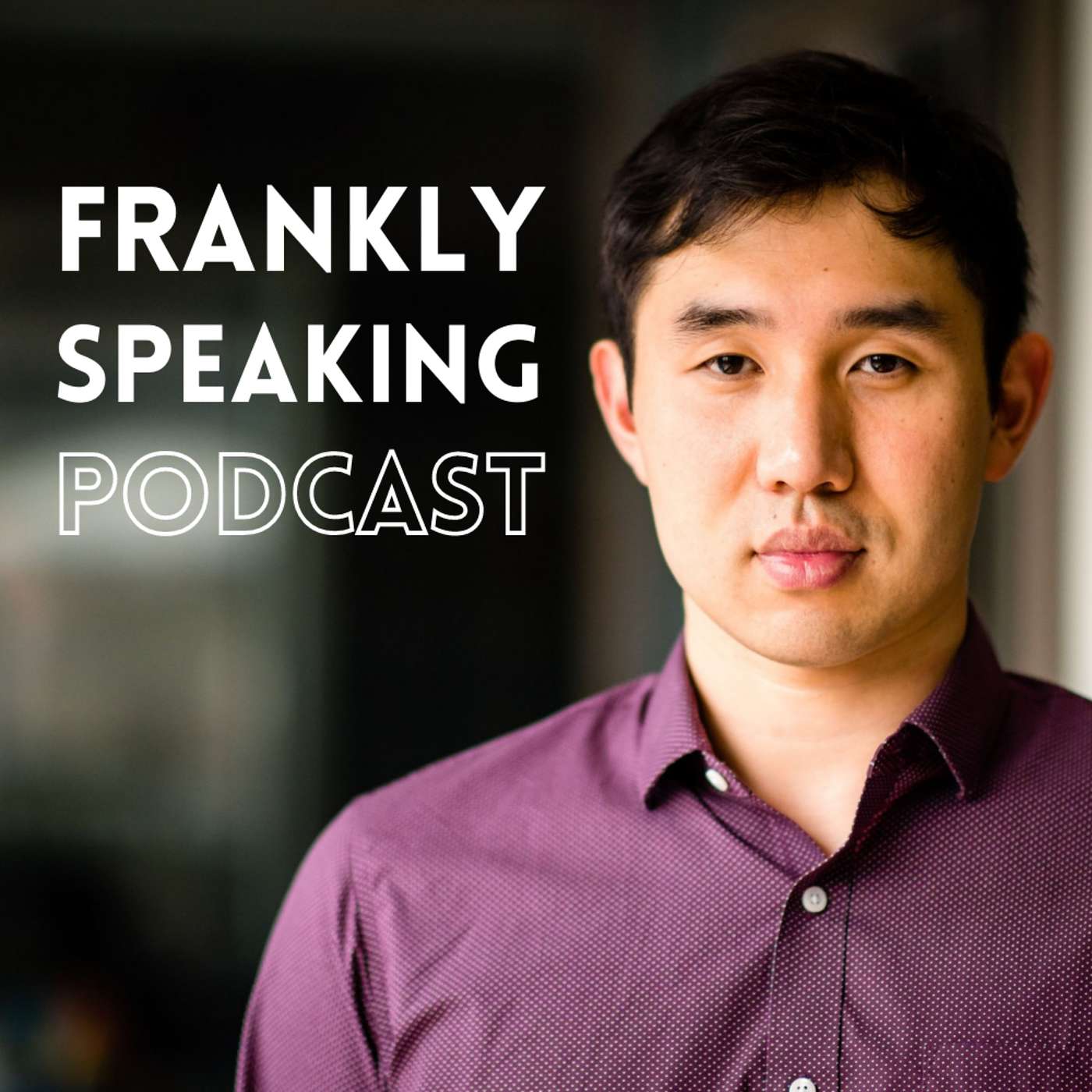
E1: Retirement at 30
Welcome to the Frankly Speaking podcast. Frank Niu shares his journey through high school, university, and silicon valley tech jobs that eventually lead to his early retirement at 30 years old.
Chapters
- 0:00 Intro: growing up and where the name Frank came from
- 1:36 Choosing the state school and college struggles
- 5:27 Interviews and the first IBM job in Boston
- 7:37 Quitting IBM and losing money day trading
- 9:47 Startup layoffs and joining Credit Karma
- 14:34 The 2017 crypto craze and a failed startup
- 15:38 Grubhub in Chicago and the polar vortex
- 17:17 Interviewing and landing the Netflix offer
- 19:26 Kids, COVID and saving over 80% of income
- 21:07 Hitting $2 million and the 4% rule
- 22:18 Paternity leave dispute and taking severance
- 25:00 Life after retirement and starting on TikTok
Mirror automatically copies the trades of top investors, politicians, and creators directly in your brokerage account. Check out choosemirror.com.
Reach out to Frank at frankjniu@gmail.com
► Follow Me On Tiktok: https://www.tiktok.com/@frankniu
► Follow Me On Twitter: https://x.com/niu_xiaofei
► Follow Me On Instagram: https://www.instagram.com/niu_xiaofei/
► Follow Me On Linkedin: https://www.linkedin.com/in/frankniu/
Transcript
0:00 Hi, I'm Frank, and you're listening to the first episode of Frankly Speaking. I'm going to share my personal journey on how I was able to retire at 30 years old. I hope you'll enjoy my story and learn something along the way. Let's start at the beginning. I was born in China and then eventually immigrated over to the United States when I was four years old. My dad's family grew up extremely poor. My grandfather didn't even know how to read. He was a literal peasant. My dad was able to bring his family out of poverty by studying extremely hard.
0:35 He studied so much that he was able to recite books cover to cover, word for word. All that studying eventually paid off. He obtained a full scholarship to a PhD program in the United States. I stayed in China until I was four years old, though. My parents didn't have the financial means to bring their kid along with them. So how did I get the name Frank? When I first came over to the States, I could not speak any English, so I wasn't really able to play with other little kids. All I did every day was watch a ton of TV.
1:10 My favorite show was called Franklin the Turtle. When my parents asked me, what do you want your English name to be? I responded with Frank, because I wanted to be like that turtle. I was your pretty typical high-achieving Asian kid. My parents would reward me with $5 for every A, but would actually take away money for every B. This worked out in my favor, because I only got one B all the way up until junior year of high school. I didn't have a whole lot of guidance from my parents growing up. They were mostly busy just trying to keep us alive.
1:42 Eventually, I got a bunch of offers from various schools, and I had a tough decision to make. Do I go to a local state school which offered me a full scholarship, or do I take out loans and go to a more prestigious school? I eventually settled on going to my local state school. I didn't want to be burdened with loans, and I also didn't want to add any additional financial pressure on my parents. Like many kids, I really had no idea what I wanted to do or what I wanted to study. As a 17-year-old kid, the main thing I was worried about was playing video games.
2:14 I loved playing games so much that I now have permanent nerve damage in my right hand. The school that offered me a full scholarship was known to have a decent engineering program. I saw that the school also had computer engineering, and I selected that as my major because I was so into computer games. I basically lucked into tech. Back then, it wasn't nearly as popular as it is today. I actually held a lot of regret by not choosing to go to the more prestigious school. It didn't matter in the long term, but I always thought, what if?
2:46 Was my school pedigree holding me back from certain job opportunities? In all likelihood, it probably was, but not enough to matter. I tried really hard my first year of college. I was able to get a 4.0 GPA and also a couple leadership positions at various places in the school. Here's some advice from college. Don't get fat. I was an athlete in high school, which meant that I ate a lot. Once I got to college, I continued to eat the same amount, but basically stopped exercising. I ballooned up from 200 pounds all the way up to 270 pounds.
3:24 It was really painful trying to lose all this weight. I got an internship at IBM during my sophomore year. I learned a lot during my time there and had a lot of fun. I was able to finish my project within a month, and they didn't really have any more work for me to do. So my daily schedule during my internship would be go to work, hit a button, and wait for all the automation to run, and then go play discus with my friends for the rest of the day. After I went back to university, I started playing a game called League of Legends.
3:55 This was a terrible decision. I was addicted to that game. I would play 8 to 10 hours every single day minimum. My grades suffered drastically. I was eventually forced to drop a couple of classes just because I was failing them, and they were required to graduate. It got to the point where I was almost about to get kicked out of my dorm, and I was the president. Luckily for me, I did drop those classes before the deadline, and I was able to retake them later. My course load was the pretty typical computer engineering track.
4:28 I ended up taking psychology and economics for my electives just because I heard they were pretty easy. In psychology, I ended up getting an A- because the teacher took attendance, and that counted towards your grade. I remember emailing my teacher at the end of the semester asking if she could bump up my grade. She did not end up raising my grade to an A. Junior year, I returned to IBM for a different internship. At this point, I recognized that my GPA is probably good enough to get a job, so I start slacking off.
5:01 I try to maintain above a 3.0 GPA, but otherwise spend most of my time watching anime and playing video games. Back then, League of Legends still had the ELO rating system. I was around 1,700. There was another intern at IBM who was semi-pro, and he was around 2,100. I graduated college in 2013, and IBM gave me a return offer. For all my interviews as a software engineer, they took place in the College of Engineering. The atmosphere in the waiting rooms was heavy. Everyone was busy frantically studying their notes, trying to cram as much knowledge as possible before the interviews took place.
5:42 I also happened to interview for a couple of consulting and sales roles, and this took place in the College of Business. It was crazy how different the atmosphere was. People were laughing with each other, everyone was joking around, no one was studying. There was actually a person who was going around and having drinks with people. I received offers for tech sales positions, consultancies, and other software companies, but the IBM one sounded the most interesting. I was going to be a cloud engineer. IBM's final offer to me was $74,000 per year in base salary, and I negotiated a signing bonus of $4,000.
6:24 They also paid for my entire relocation out to Boston. The job wasn't that hard. A typical day for me would be to go into work around 9 a.m., work for a couple hours, take a long lunch, and then leave early. So I just moved to a new city. No friends, no family, nothing to do. All I do every day is go to the gym. Luckily, we had an on-site gym at work, and so I would just work out for two hours every single day. I also started eating a lot more healthy. I would eat a banana and a couple of cashews for breakfast.
6:56 Whatever random food they had in the cafeteria for lunch. And then chicken and broccoli for dinner. I also got my wisdom teeth taken out during this time, and that helped me lose 10 pounds in one week just because I was in so much pain and I couldn't really eat anything. IBM was a great place to start my career, but it got boring pretty quickly. I'm doing well at work. My manager is giving me really good feedback. I was saving a ton of money during this time, and I'm generally very comfortable. It wasn't until my girlfriend got a job offer at Facebook in San Francisco that I started wondering if I should leave.
7:30 On one hand, I had been getting good feedback at work from my manager, and I was expecting a promotion and a large raise. But on the other hand, my girlfriend is now moving out to SF, and SF is like the tech mecca of the world. It's full of amazing job opportunities, and I had always wanted to work there. I talked to my parents about potentially quitting my job, and obviously they are against it. They recommended that I take the safe path, keep my head down at work, and continue to earn money at IBM.
8:01 Fast forward to performance reviews. I'm pretty excited because I'm expecting a raise and a promotion. I don't end up getting a promotion. My raise is 1.1%. Of course, I get the promotion and raise dangled over my head. They say, hey, wait another couple months, wait another half year, we can talk again. I'm extremely frustrated at this point. In my mind, I was already ready to leave. What's funny is that once I actually got other job offers and told them I was leaving, they very readily offered me a substantial raise to stay.
8:34 At that point, I kind of learned that my value to their company was worth a lot more than what they were paying me. And it also made me recognize how much you contribute at work is not correlated to the amount of money that you're making. Some of the more senior members of my team contributed a lot less, but were making a lot more money than me. Before I actually started my job search in earnest, I also dabbled in day trading. Wolf of Wall Street had just come out, and I thought, how hard could it be to trade full-time?
9:02 It seems so easy. You can pretty much imagine what happened next. I had some initial success with penny stocks. I was able to double $2,000 to $4,000. And then I got greedy. I started putting more money in. $15,000, then $30,000. You can kind of guess how this ends. I lost the majority of that money and got margin called by Fidelity. Fidelity actually did a study on who their most profitable traders are, and you'll be surprised at their results. It's basically people who forget about their account. 99% of day traders lose money.
9:38 Maybe you'll be in that top 1%, but most likely you're not. Humans are extremely emotional, and we tend to buy and sell at the worst possible moments. Which I had to learn the hard way. Because IBM was so large and process-laden, I wanted to go the exact opposite route and go to the tiniest startup I could find. Douala gave me an exploding offer. So that basically means they only gave me a couple days to accept. Back then, I didn't really realize that this was just a poor negotiation tactic. I thought that they would actually rescind my offer if I wanted an extension.
10:14 They offered me a $130,000 base salary, and also some stock options. Eventually, those stock options would become worthless, but oh well. My girlfriend and I actually break up before I even moved to San Francisco. And I also had a lot of trouble just trying to find housing. Initially, I was going to move in with this guy who was renting out his extra room. His parents helped him pay for a two-bedroom condo, and he was looking to make a little extra cash. Two weeks before I move out there, he tells me that he found someone else who was willing to pay a higher price for rent.
10:46 So at this point, I'm scrambling because I'm about to move out there and I have nowhere to live. And this is how I met my crazy roommate. Let's call her Karen. Karen was a forex trader at a large bank. She was an attractive young woman with a lot of attitude. I later learned that she was a pathological liar, but that didn't happen until much later. I found her listing on Airbnb originally, and we had a deal where I would move in for a month to see how it was and then potentially sign a longer-term lease if things worked out.
11:19 Moving to San Francisco was amazing for my career. Douala had really good technology. I was introduced to many modern programming concepts such as test-driven development, microservices, and AWS. Because there weren't that many engineers, I was given a lot of responsibility. It was the complete opposite of IBM. It had a modern tech stack and moved much more quickly. There was just one problem, though. The company didn't make any money. The founder tried to raise money but was unsuccessful. I was only at Douala for less than six months before there were company layoffs.
11:58 They offered a couple weeks of severance, and I was unemployed for roughly a month before my next job. That one month where I was not working, though, was actually extremely fun. I was going on a lot of dates, attending a lot of meetups, and just generally having a great time in SF. I wasn't worried about money at all because at that point, I had saved up enough for rent. The job market was also extremely hot. I had dozens of interviews lined up within the week. I got several offers from various tech companies but eventually decided to go with Credit Karma.
12:34 Credit Karma looks like it had all the things that Douala did not. They were a bit further along, they had a lot of money. They were also part of Glassdoor's top 25 small and medium businesses to work for. And I knew I liked the whole startup vibe, so it seemed like the perfect choice. They offered me $155,000 in base salary, with $100,000 in RSUs. They have since been acquired by Intuit, and the stocks are worth a lot more now. I'm given a ton more responsibility at Credit Karma, and I'm able to accomplish an amazing amount of work.
13:08 Surprisingly, maybe not surprisingly, there's still a lot of politics even at these smaller companies. For example, there was this fitness app that we were forced to use for our health reimbursements. It was a really sketchy app, and it wouldn't even work half the time. Eventually, I found out it was because the current head of HR's husband owns the company. So I do a little bit of research into this company to see if it's legitimate. It turns out, not really. The only large customer that they have is Credit Karma.
13:35 I saw the CEO in the lunchroom one day, and I decided to confront him about it. I first ease him into the conversation, asking about his kids, if he likes video games. He responds and asks how I'm liking it there so far. And that's when I hit him with the fitness app questions. You could tell he was pretty nervous during this time. He was wringing his hands. He said he would look into it, but it was obvious that he already knew about the issue. That HR person eventually got fired, but she just moved on to bigger and better things elsewhere.
14:05 It did not affect her career at all. There's a thing called the Peter Principle, where you basically keep on getting promoted until you're no longer good at your job. And thus, everyone becomes incompetent at a company. I would say it's even more extreme in Silicon Valley. Because the job market is so hot there, people basically just fail up. You get fired, but then you just get a promotion somewhere else. I had an amazing time at Credit Karma and loved working there in general. But then 2017 happens, and the whole crypto craze started.
14:39 Bitcoin rose from $1,000 all the way up to $20,000 in the span of essentially one year. Ethereum went up from $50 to over $1,000, and Litecoin went up from $4 to over $400 at its peak. I'm still relatively young at this point, and I'm thinking, I can't afford to miss this. So I quit my job at Credit Karma. I worked on the project by myself for a couple months before I convinced my friends to join. The basic idea for the company was that we would tokenize equity. And I guess I was pretty convincing. I was telling them, this is the future.
15:14 We need to get on this. We're going to become fabulously rich and change the world. At this point, crypto was not nearly as mainstream as it is today. We couldn't get any lawyers to work with us. We're a bunch of engineers. So in our minds, we think, okay, we'll build this really cool product, and people will just naturally come to use it. But obviously, that's not what happened. After working together for several months, we have zero traction. The most interesting that happened during this time was we got a call with John McAfee as a potential investor.
15:44 He did not invest. Not only did our startup fail to gain traction, but I'm also no longer friends with those co-founders. I don't care that our startup failed, but losing those friendships was pretty tough. At this point, I was in a pretty serious relationship, and we were looking to buy a house. San Francisco real estate was out of our budget, so we looked towards Chicago. Eventually, I got an offer at Grubhub, and they offered me around $200,000 in total comp. For those that don't know, most offers give you a lump sum of RSUs when you first join, and that typically vests over four years with a one-year cliff.
16:21 For retention purposes, you don't actually get any of your stock package unless you stay for one year. Grubhub's stock went to all-time highs right when I hit my one-year vesting period, so I ended the year with around $300,000 in total comp. Our rent was also pretty cheap. We had a one-bedroom apartment that was decently sized, and it only cost us about $1,900 per month. There is a ton of great food in Chicago, and the summers are amazing. With the money made from selling that stock, we were looking to buy a house finally.
16:53 But that year was also the year of the polar vortex. For those that don't know what that is, it's basically a certain set of climate conditions that causes extremely cold weather. They had warnings that you shouldn't go outside because it would damage your lungs. This event basically made us realize that we were not going to settle down in Chicago. At this point, we think maybe we want to go back to California. Mainly because of the weather, but also because of the job opportunities. Even if the next role doesn't work out, I could easily find a new one.
17:25 This time around, I basically breezed through all of my interviews. I have a lot of experience interviewing and negotiating jobs at this point. I initially got some offers from Bird and Wag, but they were relatively low, in the $200,000 range. Even lower than what I was making at Grubhub at the time. Then I got an offer from Etsy in New York, which was around $250,000. I was also in the process of interviewing with Snapchat. At that point in time, I had never really considered even getting a fang job. On LinkedIn, I saw how my friends would be getting jobs at Google and Facebook and other top companies.
18:00 And I'm thinking, wait, they're not any better than me, so clearly all I needed to do was either try harder or study more to get these jobs. The Netflix interviews were definitely the most intense set that I did during this time. There were actually two days of interviews. The first day was more technical. They asked me some system design questions and other technical related things. And then the second day was almost entirely behavioral. They asked you a ton of culture questions just to make sure you know what you're getting yourself into.
18:30 Their offer came in way higher than everyone else. The total compensation package ended up being roughly around $500,000, which was just a crazy amount of money to me at that time. Netflix offers most of their compensation in cash, and they let you split it however you want in terms of getting their stock options. One of the things that drew me to the company besides the high compensation package was the work culture. Netflix believes in people over process. They want to move quickly and be agile. There's a common saying there called freedom and responsibility.
19:02 You're given the freedom to make your own choices, but you're also expected to take responsibility if things go wrong. We've moved back to the Bay Area for Netflix, and it was honestly a great place to work. My wife also gets pregnant with our first child around this time. Netflix was pretty much my dream job. I had finally gotten into Fang, and I'm making a ton of money. We have our first child. Life definitely got more challenging. We were tired constantly. Between juggling work and raising a kid, we didn't have much time for much else.
19:33 Things in general are looking good, though. People at work say that I've changed for the better after having my kid. I've become a lot more patient. My wife and I are saving over 80% of our income in this point and investing all of it. And then we start looking to buy our first home in San Jose until COVID hits. Cities start to go into lockdown all around the world, and the stock market crashes. We had plans to send our kid to daycare, but now no longer feel safe doing so. We tell our nanny that we think we're going to start taking care of the kid ourselves and basically transition to working from home full-time.
20:08 Our initial thought was that maybe this will only last a couple months, and by the time summer rolls around, it'll be gone. Our lease was actually ending around this time, and so we thought we might be able to move to Canada to get some help with childcare, with the plans to move back once COVID dies down. For the next year and a half, we saved and invested over 80% of our income into crypto, cannabis, shroom stocks, and various technology stocks. Near the beginning of 2021, we also welcomed our second child.
20:39 Due to COVID and the lack of childcare options, I decided to take a full year of paternity leave to support my wife and family at home. Netflix used to have one of the most generous paternity leave offerings in the world. I say used to, because they actually changed this policy during COVID. They offered up to one year paid of paternity leave. This meant getting your full salary. We were extremely fortunate to be in a position to continue to invest during this time period. It was probably the greatest wealth transfer of our lifetimes.
21:11 If you take a look at a lot of these asset classes, housing, crypto, stocks, even collectible card games, everything is near all-time highs. I'd always had a passing interest in the FIRE movement, but spending time with my kids made me consider it more seriously. FIRE stands for Financial Independence, Retire Early. $2 million was always the loose number I had in my mind for me to retire. At some point during paternity leave, our net worth explodes past $2 million, excluding the value of the residents that we live in.
21:43 According to the 4% rule, we can spend roughly $80,000 per year and retire early. This works because on average, your investments should go up around 5% to 6% per year. Because you're only withdrawing 4% per year, your money should theoretically never run out. You can also withdraw 3% if you want it to be extra safe. It was an amazing experience to be on paternity leave. I got to experience all of my child's first moments. And even though it was extremely difficult and tiring to take care of them, it also brought me the most amount of joy I've ever experienced.
22:18 My manager contacts me around 6 months into my planned leave. So for some context, the entire reporting chain, from the VP up to my immediate manager, basically leaves or gets fired during my time at Netflix. During my most recent pat leave, my director and immediate manager both leave. My new manager contacts me and informs me that the team is struggling and she needs me to come back ASAP. Obviously, I do not want to return early. I have two young infant kids, both of whom are not yet vaccinated. We had a death in the family just the previous year and we are not willing to take any risks with our kids.
22:55 I let my manager know that the only way I can come back early is if an infant vaccine is available. She does not take this well. She basically responds by threatening to fire me without severance if I do not return within the week. She works in conjunction with HR to try and retroactively change my paternity leave dates from one year to six months. The only way I even found out was because I got an automated email from the HR software that we use. I contacted our employee services team and asked about how my leave date was changed and they confirmed it was my HR business partner who did it.
23:29 My manager attempts to do some damage control via email. She claims to have no knowledge of why I'm trying to take one year of paternity leave, despite ample evidence that this was the plan all along. Emails, team meetings, my calendar auto response, Slack status, one-on-ones I had with my teammates. All of these things confirm my original leave date of one year. They were essentially trying to rewrite history and force me to come back to work instead of prioritizing my family during the worst pandemic of our lifetimes.
24:08 Lawyers get involved, I report my manager and HR business partner to employee relations, which is an entirely new function at Netflix, and spend the next month extremely stressed out about the whole situation. Eventually, they gave me two options. One was to go back to work early, or two, take four months of severance and we go our separate ways. I took the severance. If you asked me to choose between the health and safety of my family over a job, I would choose my family every single time. We were extremely lucky to be in a financial position that allowed us to do this.
24:44 I've had a fairly successful technology career, but it was always just a job to me. I don't have any great passion for computer science. We had consistently saved and invested most of our money during our careers, and we were finally able to hit our fire number in 2021. I am now the happiest I've ever been. I can spend time with my kids, read books, watch anime, and generally do whatever I want. It's incredibly liberating to choose what I want to do each day and not be forced to endure corporate life.
25:15 My wife started making TikToks in her free time and challenged me to beat her number of followers by the end of the year. I ended up surpassing her follower count within a couple of days, and that's actually how I got started. In about one month, I amassed roughly 400,000 followers. During my journey, I never really had a mentor-type figure. I learned a lot of my lessons the hard way, but hopefully you don't have to. In the short term, I plan on continuing to make interesting content about tech, finance, general career advice, and everything else.
25:48 So this concludes my first episode of Frankly Speaking. I hope you found it insightful, and I'll see you next time.